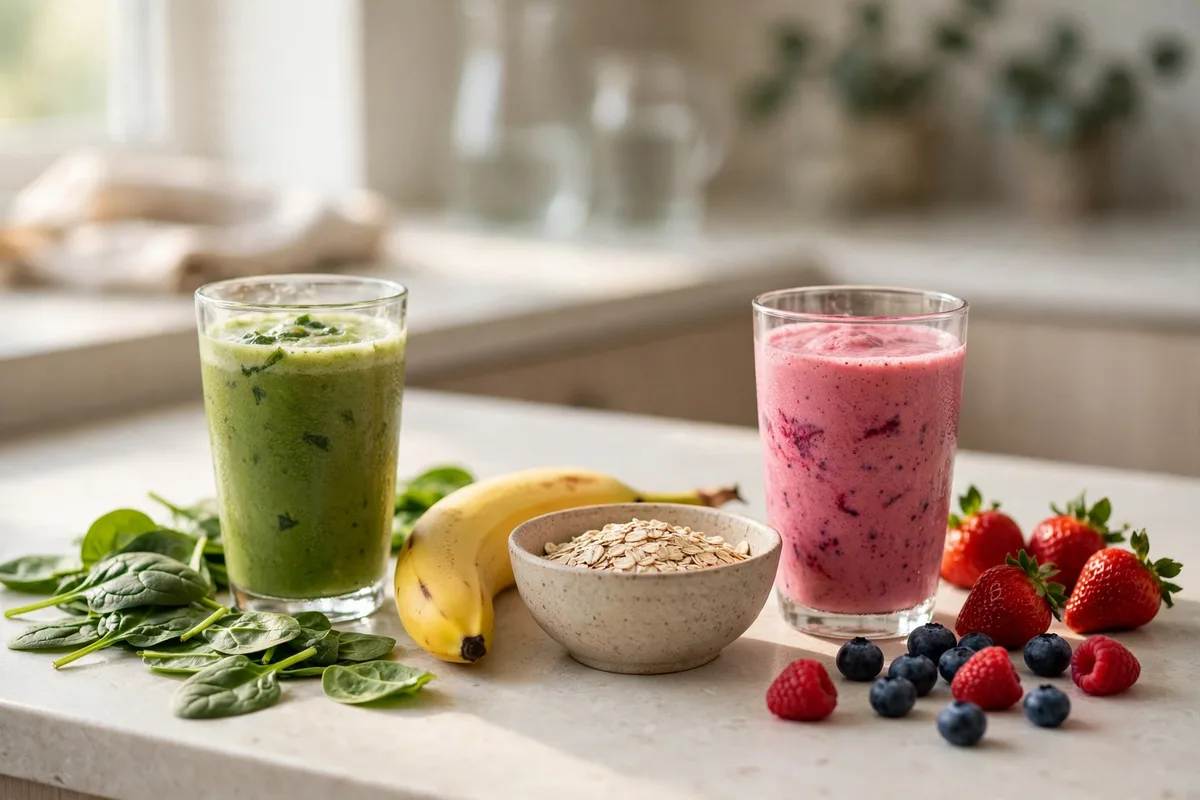
Your gut does far more than digest lunch. The community of microbes living in your digestive system — the gut microbiome — helps train the immune system, produces useful compounds from the food you eat, and communicates with the brain in ways researchers are still mapping. When it is out of balance you may notice it in everyday ways: bloating, irregular digestion, low energy or skin that never quite settles. The good news is that gut health responds to ordinary habits. You do not need expensive tests or restrictive diets to improve gut health; you need variety, fibre, patience and a few consistent routines.
Feed Your Microbes With Variety
Gut microbes thrive on diversity, and the simplest way to support them is to widen the range of plant foods you eat across the week: different vegetables, fruits, beans, lentils, whole grains, nuts, seeds, herbs and spices all feed different microbial families. A practical way to think about it is the balance on your plate — our guide to how to build a balanced plate shows how to combine these groups at ordinary meals. Variety does not require exotic shopping. Swapping one regular vegetable for a new one each week, choosing mixed beans instead of a single type, and rotating grains between oats, brown rice, barley and wholemeal bread all count.
Make Fibre Your Daily Default
Fibre is the main food source for many beneficial gut bacteria, and most adults eat less than the recommended amount. Build it up gradually — a sudden jump can cause the very bloating you are trying to fix — and drink enough water alongside it. Easy wins include adding lentils to soups and sauces, keeping the skins on potatoes and apples, choosing wholegrain versions of bread and pasta, and starting the day with oats or another wholegrain cereal. Learning how to read food labels helps here, because fibre content per serving is printed on packaged foods and varies widely between products that look similar.
Add Fermented Foods Regularly
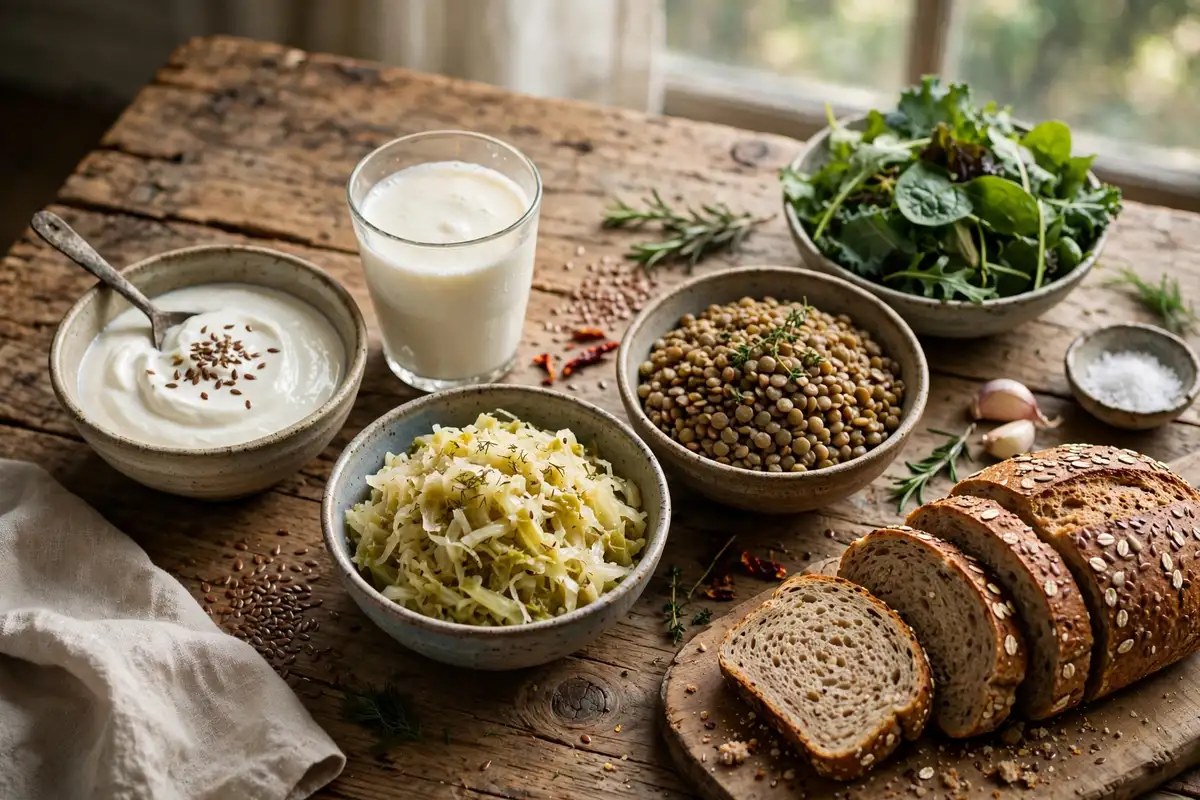
Fermented foods bring live microbes of their own to the table. Plain yogurt with live cultures, kefir, sauerkraut, kimchi, miso and traditional pickles made by fermentation (rather than simply stored in vinegar) have all been part of human diets for centuries. A small portion most days is a realistic goal — a glass of kefir at breakfast, a spoonful of sauerkraut beside lunch, miso stirred into soup. Introduce them gradually if they are new to you, and remember they complement a fibre-rich diet rather than replacing it: fermented foods supply the microbes, fibre supplies their food.
Everyday Habits That Help — and Harm
Gut health is shaped by more than food. Regular movement supports healthy digestion, and even a daily walk makes a difference. Sleep matters too, because the gut and brain keep close time with each other; erratic sleep often travels with erratic digestion. Stress is another well-known trigger, so the calming routines that help your mind usually help your stomach as well. On the other side of the ledger, frequent heavy drinking, smoking and long courses of antibiotics can all disturb the microbiome, and highly processed foods eaten at the expense of everything else leave microbes underfed. Eating with the seasons, as our seasonal eating guide describes, naturally rotates your plant variety through the year and keeps meals interesting at the same time.
What About Probiotic Supplements?
Supplements are the question everyone asks, and the honest answer is that they are optional extras rather than foundations. Probiotic products vary enormously in strains, dose and quality, and for generally healthy people the evidence supports food-first habits — fibre, variety and fermented foods — far more strongly than any capsule. Prebiotic supplements and powders are simply concentrated forms of the fibres you can get from onions, garlic, leeks, oats, beans and bananas. If you enjoy the convenience, they do no harm for most people, but money spent on a wider variety of vegetables will almost always do more for your gut than money spent on a pill. Anyone with a medical condition, a weakened immune system or ongoing medication should talk to their doctor before starting supplements, because live-microbe products are not suitable for everyone.
A Simple One-Week Starter Plan
Putting it together does not need a overhaul. On day one, swap your usual breakfast for a wholegrain one and add a glass of water before coffee. By midweek, add one fermented food a day — a small yogurt, a glass of kefir, a forkful of sauerkraut with dinner. Across the week, aim to try two plant foods you do not normally buy: perhaps lentils and a new leafy green, or barley and a different bean. Take a twenty-minute walk after your largest meal each day, and keep bedtimes roughly regular. At the end of the week, notice what changed — digestion, energy, comfort — and keep the habits that felt easy. That is how gut health improves in real life: not through a dramatic reset, but through small, repeatable choices stacked in the right direction.
Be Patient and Sensible
Microbiomes change over weeks and months, not days, so judge any new habit after a month rather than a weekend. Keep changes simple enough to keep: one new plant food a week, one fermented food a day, fibre increased step by step. And know the limits of self-help — persistent pain, blood in your stool, unexplained weight loss or symptoms that wake you at night are reasons to see a doctor promptly, not to buy a supplement. For everyday discomfort, though, the path to a happier gut is refreshingly ordinary: more plants, more fibre, fermented foods, movement, sleep and time.