A good smoothie can be the difference between a rushed, hungry morning and a calm one. Blending takes minutes, the ingredients are forgiving, and a well-built glass can carry fruit, vegetables, protein and healthy fats in a single serving. The trick is balance: too much fruit and you are hungry again by ten o’clock, too little liquid and the blender gives up. This guide explains how to build healthy smoothie recipes that actually keep you full, then shares simple combinations you can vary all week without getting bored.
The Basic Formula for a Balanced Smoothie
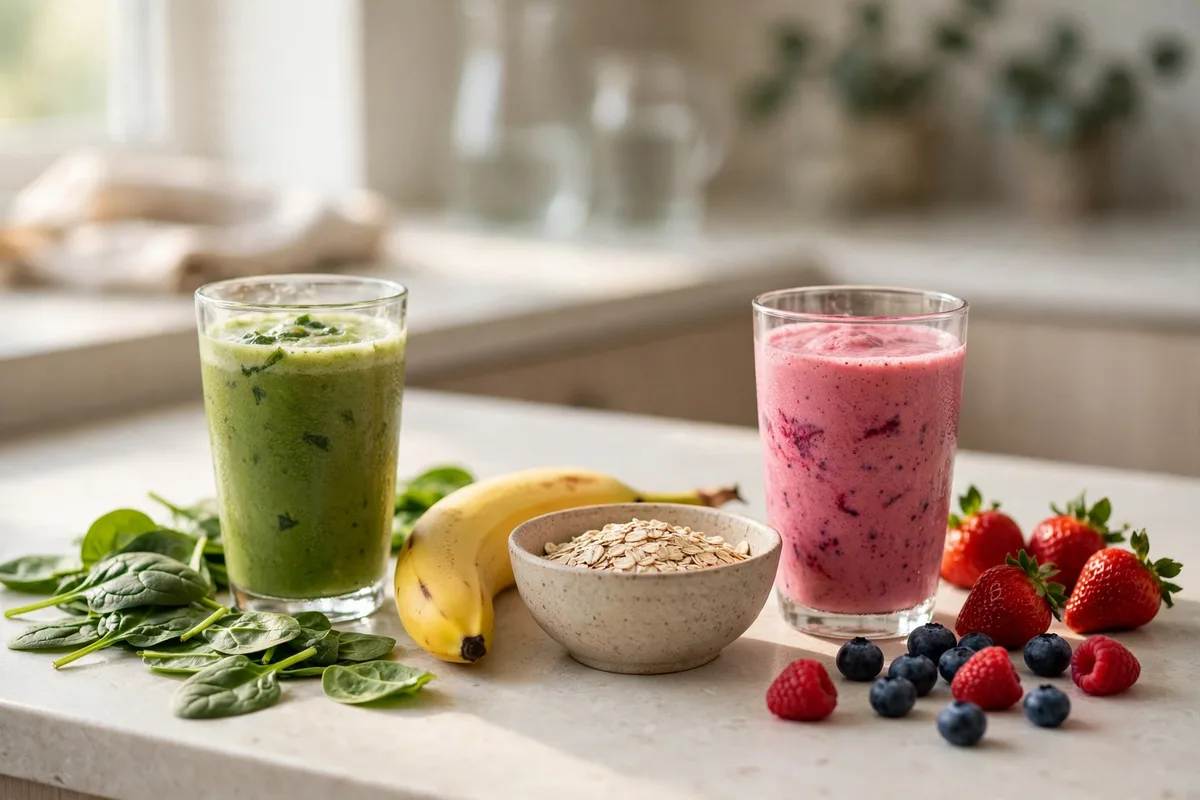
Every reliable smoothie follows the same structure. Start with a liquid base of about 200 to 250 millilitres — water, milk, a fortified plant drink or plain kefir all work. Add one to two handfuls of fruit for natural sweetness and fibre, then a handful of vegetables such as spinach, cucumber or cooked beetroot, which blend in more mildly than most people expect. Next comes the staying power: a protein source such as Greek yogurt, silken tofu, a spoon of nut butter or a scoop of oats. Finish with a small amount of healthy fat — ground flaxseed, chia seeds or a piece of avocado — and ice if your ingredients are fresh rather than frozen. This formula follows the same principles as learning how to build a balanced plate, just in a glass.
Five Easy Combinations to Start With
Once the formula feels familiar, variations are endless. A berry breakfast smoothie blends frozen mixed berries, banana, Greek yogurt, oats and milk for something that eats like a meal. A green starter combines spinach, mango, cucumber, lime juice, ginger and coconut water — bright, fresh and not at all grassy. For a tropical version, try pineapple, frozen mango, coconut milk drink and a spoon of chia seeds. A mocha smoothie suits coffee lovers: cold coffee, banana, cocoa powder, peanut butter and milk. Finally, an apple-pie smoothie — chopped apple, oats, cinnamon, yogurt and milk — tastes like dessert while behaving like breakfast. Rotate them through the week and you will never face the same glass twice.
Prep Ahead: Freezer Packs and Fridge Tricks
The fastest mornings are prepared the night before. Portion fruit and vegetables for each smoothie into freezer bags or boxes on the weekend, and in the morning you only add liquid and protein and blend. Frozen ingredients also give a thicker, colder result without watering the flavour down with ice. Keep a small stock of basics — frozen berries, bananas you froze at the weekend, spinach, yogurt and nut butter — and you can always assemble something. This kind of light planning is the breakfast version of the approach in our guide to meal planning for beginners: a few minutes of preparation buying you calm, healthy choices all week.
Making Smoothies Work Around Your Day
A smoothie is flexible food. Before a morning workout, keep it lighter and carb-focused — fruit, oats and milk — and take your protein afterwards; our guide to what to eat before and after a workout explains the timing in more detail. On desk days, the fuller formula with protein and fat prevents the mid-morning snack run. Smoothies also travel: blend at home, pour into a sealed bottle and keep it cold. Just remember that a smoothie is a drinkable meal, not a magic health tonic — it works best as part of an overall pattern of varied, seasonal eating, the same philosophy behind our seasonal eating guide.
Choosing Ingredients That Earn Their Place
Not every ingredient pulls the same weight. Leafy greens such as spinach and kale disappear into fruit flavours while adding fibre, folate and minerals, which makes them the easiest upgrade for beginners. Frozen fruit is a secret weapon: it is picked ripe, usually cheaper than fresh out of season, and it chills the smoothie without diluting it. Protein choices change the character of the drink — Greek yogurt makes it tangy and thick, silken tofu keeps it neutral and creamy, and cottage cheese blends smoother than most people expect. For healthy fats, a tablespoon of ground flaxseed or chia adds almost no flavour but a great deal of nutrition, while nut butters bring richness that suits banana and cocoa combinations. Spices deserve a place too: cinnamon warms an apple smoothie, ginger sharpens a green one, and a pinch of turmeric with black pepper turns a mango blend golden. Build a small pantry of these staples and you can improvise a balanced smoothie from whatever the fridge is trying to use up.
Blending Technique: Small Details, Better Texture
Texture decides whether a smoothie becomes a habit. Add liquid first so the blades can pull everything down, then soft ingredients, and frozen items last. Blend longer than you think — a full minute usually turns a gritty oat smoothie silky — and stop to scrape down seeds or nut butter that cling to the sides. If the result is too thick, add liquid a splash at a time; too thin, add frozen fruit or a few ice cubes. Taste before pouring: a squeeze of lemon or lime lifts flat flavours, and a tiny pinch of salt quietly makes fruit taste more like itself. Drink smoothies fresh where you can, but a sealed jar filled right to the top keeps well in the fridge until the next morning, which is exactly what busy people need.
Common Mistakes to Avoid
A few habits can quietly undermine a healthy smoothie. The first is the all-fruit blend: delicious, but mostly sugar and fibre, leaving you hungry quickly. The second is sweetened extras — honey, syrups and sweetened yogurt drinks can turn breakfast into dessert; taste before adding anything sweet, because ripe fruit often does the job alone. Third, size matters: a blender jug meant for two can turn into one very large portion, so measure once or twice until your eye learns the quantities. Finally, chew something too. Nutritionists often point out that eating involves more than nutrients, so pair a smaller smoothie with a slice of toast or a boiled egg if a drink alone never feels like breakfast. Keep those points in mind and your blender becomes one of the easiest healthy habits you own.