
Most expensive car repairs do not arrive out of nowhere. They build up quietly from small things nobody checked: oil run low for a few thousand miles, a tyre slowly losing pressure, a battery weakening through the winter. A simple car maintenance checklist that you work through once a month catches those small things while they are still cheap, and it takes less time than a fuel stop. You do not need mechanical training or a workshop full of tools — just a tyre pressure gauge, a rag, and about twenty minutes.
Here is the checklist our editors recommend, organised the way you would actually walk around the car.
Under the Bonnet: Oil and Fluids
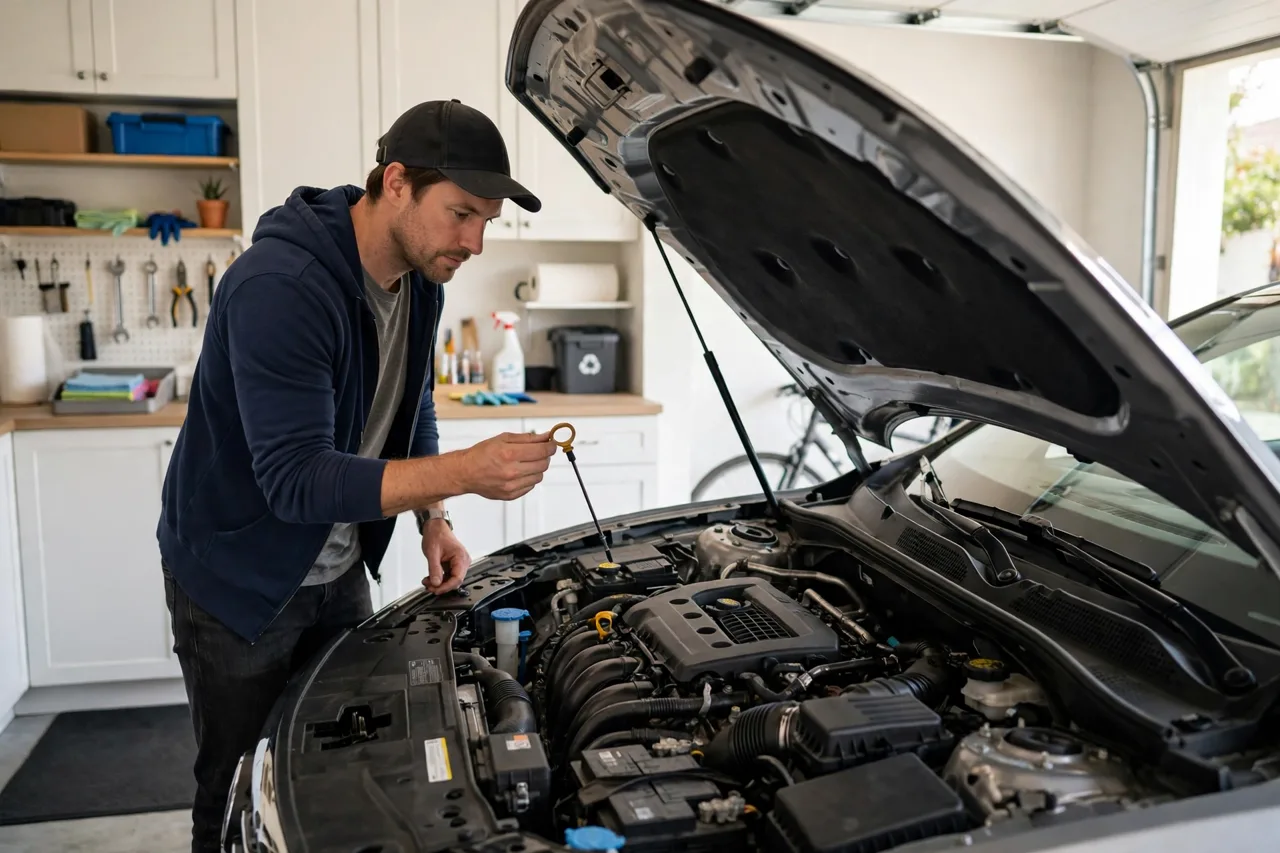
Start with the engine oil, the single most important item on any car maintenance checklist. With the engine cold and the car on level ground, pull the dipstick, wipe it, dip it again and read the level: it should sit between the minimum and maximum marks, and the oil should look amber rather than black and gritty. Top up with the grade listed in your owner’s manual if it is low, and book an oil change if the oil is very dark or the service interval has passed.
While the bonnet is up, check the coolant level in its translucent reservoir, the brake fluid level, and the windscreen washer bottle. Coolant and brake fluid should sit between their marked lines; if brake fluid is low or keeps dropping, treat it as a warning sign and have the brakes inspected rather than simply topping up. Top up the washer bottle every month — it empties faster than most drivers expect.
Tyres: Pressure, Tread and Damage
Tyres are your only contact with the road, and they lose pressure gradually even when nothing is wrong. Check all four tyres — and the spare, if you have one — with a gauge, and inflate them to the pressures on the sticker inside the driver’s door frame or fuel flap, not the number printed on the tyre itself. Under-inflated tyres wear faster, use more fuel and handle poorly in an emergency stop.
Check tread depth with a coin or gauge; most regions set the legal minimum at 1.6mm, but grip in the wet falls away well before that, so plan replacements around 3mm. Run your eyes over the sidewalls for cuts, bulges or cracks, and look for uneven wear across the tread, which usually points to wheel alignment that needs attention. Owners who enjoy their cars often swap notes on exactly these basics — the discussions in this Ford Bronco Sport owner community are a good example of everyday drivers keeping on top of tyre and upkeep questions.
Brakes, Lights and Wipers
You cannot fully inspect brakes without removing a wheel, but you can listen and feel. Squealing, grinding or a pedal that feels soft or travels further than usual all mean the car needs a professional inspection soon, not next season. Many modern cars also show brake pad wear through the wheel spokes, and a warning light will flag serious problems.
Lights take one minute with a helper, or against a wall or garage door: headlights on both beams, indicators, brake lights, reverse light and number plate light. Replace failed bulbs promptly — they are cheap, and driving with one out is an easy way to be stopped. Finally, test the wipers and look at the blades: if they smear, judder or leave arcs of unwiped screen, new blades are a small cost for a big safety gain, especially before a long trip. If you are preparing the car for a holiday drive, pair this checklist with our guide to staying healthy while traveling so both car and driver arrive in good shape.
Battery, Belts and the Little Things
Most batteries last three to five years and rarely fail without hints: slower cranking on cold mornings, dimmer lights at idle, or a battery warning light. Keep the terminals clean and tight, and if your car struggles to start twice in one week, have the battery tested before it strands you. Glance at the visible belts for cracks or fraying, and listen for new squeaks from the engine bay.
The little things matter too. Test the air conditioning occasionally even in winter to keep its seals working, check that all doors and the boot lock and unlock smoothly, and make sure your warning triangle, jack and wheel brace are actually in the car. A monthly routine works the same way as any good habit system — much like the simple weekly structure in our meal planning guide, the power is in doing small checks regularly rather than one big effort once a year. Eating well on the road helps too, and our seasonal eating guide is full of easy ideas for drivers who live out of service stations.
Seasonal Checks Worth Adding
Twice a year, add a few seasonal items to the routine. Before winter, test the heater and demisters, check that your coolant mixture protects against the coldest temperatures your area sees, and consider whether your tyres suit the season. Before summer, run the air conditioning on full for ten minutes, check coolant hoses for softness or swelling, and look at the cabin filter if the vents smell stale. Drivers in hot climates should also watch tyre pressures more closely in heatwaves, because pressure rises with temperature and an already over-inflated tyre wears its centre tread quickly.
Seasonal checks are also the right moment to deal with the jobs the monthly list deliberately leaves out: brake fluid and coolant changes, spark plugs, timing components and gearbox oil all follow the manufacturer’s service schedule rather than a calendar you invent. The monthly checklist keeps you safe between services; the service schedule keeps the car alive for years. Keep both, and the two work together.
Your Simple Monthly Routine
Put it together and the routine looks like this: oil and fluids under the bonnet, pressures and tread on all tyres, a lights-and-wipers check, a listen to the brakes and starter, and a glance at belts and battery. Twenty minutes, once a month, ideally on the same weekend day so it becomes automatic. Keep a note of what you topped up and when; a simple list on your phone turns guesswork into a record, and it shows a future buyer that the car was cared for.
A car maintenance checklist will not make you a mechanic, and it is not meant to. It simply keeps you ahead of the failures that strand people at the roadside and turn minor wear into major bills. Twenty minutes a month is a small price for a car that starts every morning and stops every time you ask it to.