A balanced plate is the simplest way to eat well without counting calories, weighing portions or following a complicated diet plan. Instead of rules and restrictions, it uses the space on your plate as a guide: fill it with the right proportions of vegetables, protein, whole grains and healthy fats, and most meals look after themselves. Once you understand the pattern, you can apply it to breakfast, lunch and dinner, at home or eating out, with whatever food you already enjoy.
This guide explains how a balanced plate works, what belongs in each section, and how to adjust it for different appetites, budgets and tastes, so healthy eating becomes a habit rather than a project.
What a balanced plate looks like
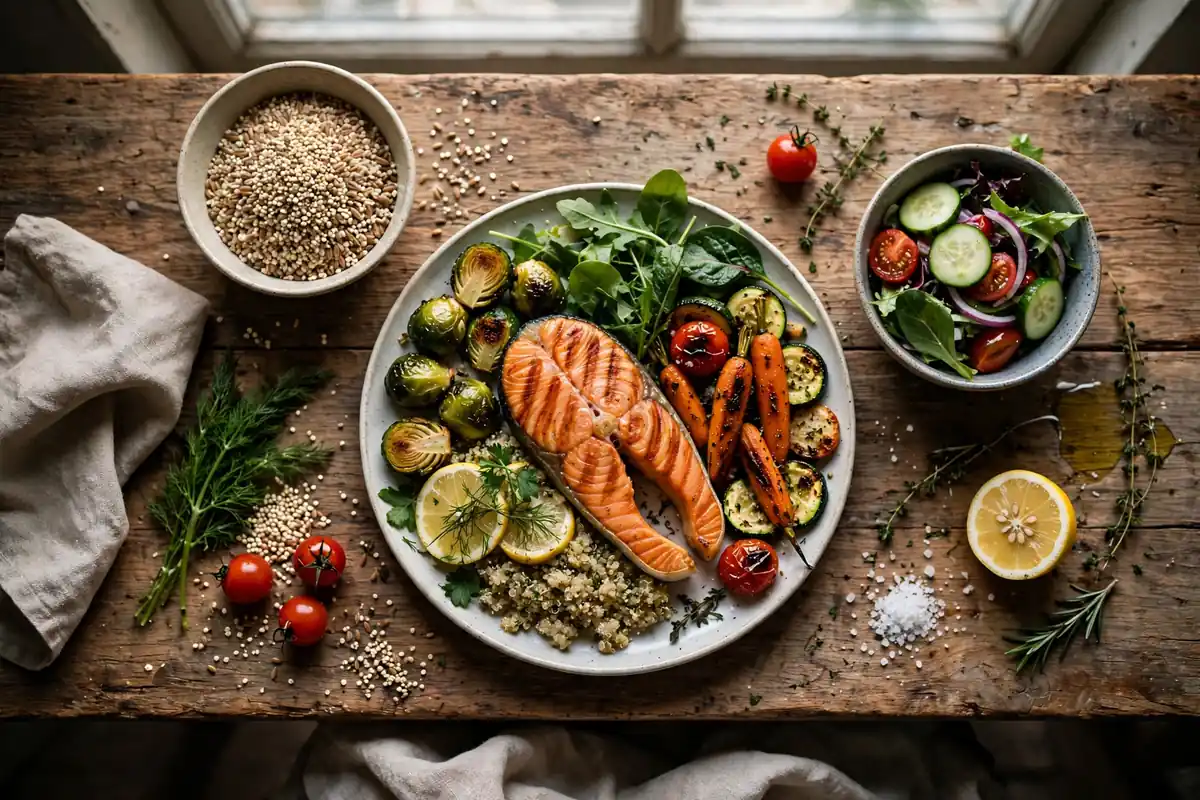
The classic balanced plate is divided into three parts. Half the plate is vegetables and salad, a quarter is protein, and a quarter is whole grains or starchy foods, with a small amount of healthy fat and a glass of water alongside. That is all there is to it. The proportions do most of the work: vegetables provide volume and fibre so you feel full, protein supports muscles and keeps hunger away for longer, and grains give steady energy instead of a quick spike and crash.
The idea fits naturally with eating in tune with the seasons. Our guide to seasonal eating shows how the vegetable half of the plate changes through the year, from spring greens to autumn squash, which keeps the pattern fresh instead of repetitive.
The vegetable half: colour and variety
Aim to make the vegetable portion the most colourful part of the meal. Different colours signal different nutrients, so a mix of leafy greens, red peppers, orange carrots, purple cabbage and white cauliflower across the week covers far more ground than the same side salad every day. Fresh, frozen and tinned vegetables all count, which makes the vegetable half easy on a budget too.
If half a plate of vegetables sounds like a lot, start where you are and add a little more each week. Serve salad or cooked vegetables first while you are hungriest, keep a bag of frozen mixed vegetables for busy nights, and add vegetables into dishes you already cook, such as extra peppers and courgettes in a pasta sauce or grated carrot in a sandwich filling.
The protein quarter: more choice than you think
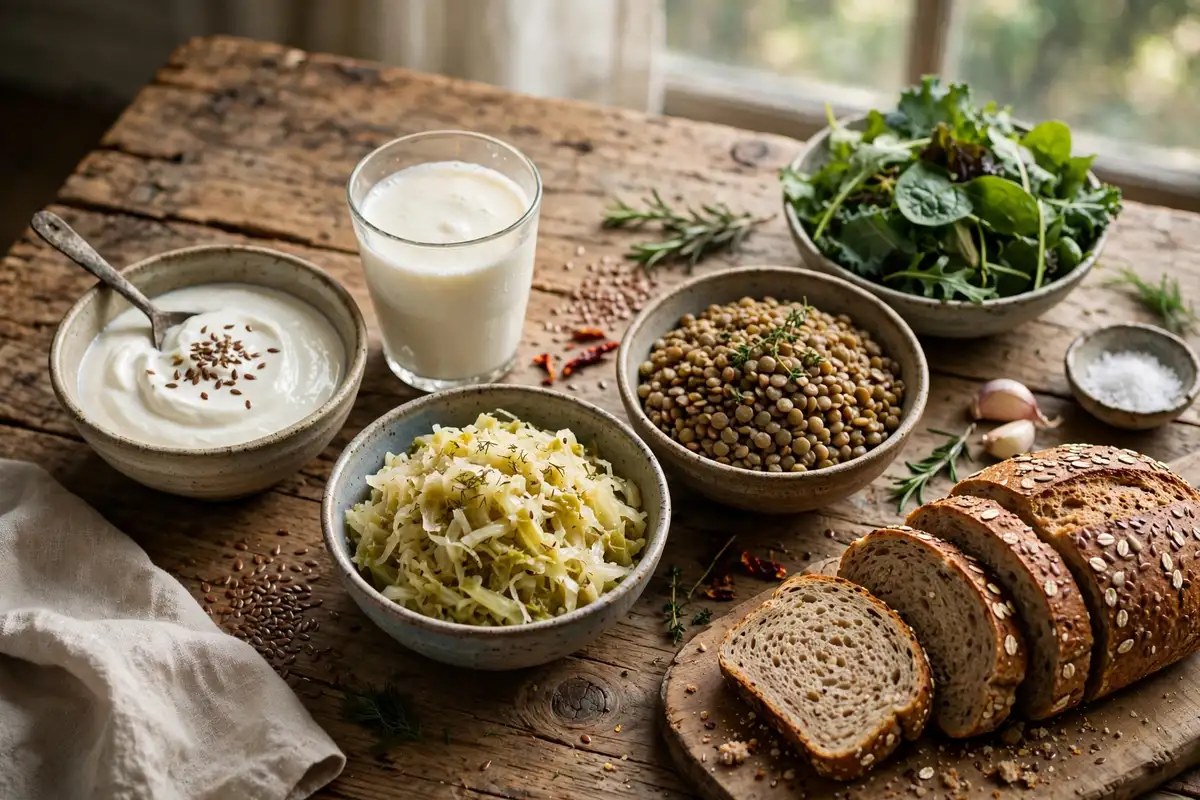
Protein anchors the balanced plate. Meat and fish are familiar options, but eggs, beans, lentils, chickpeas, tofu, yoghurt and cheese all do the same job, usually for less money. A portion roughly the size of your palm is a practical guide for most adults. Rotating protein sources through the week also spreads nutrients: oily fish brings omega-3 fats, lentils bring fibre and iron, and eggs bring almost everything in a small, cheap package.
When you eat out, the protein quarter is a useful check. Restaurant meals often arrive with a generous protein portion and very little else, so asking for extra vegetables or a side salad restores the balance without changing the dish you wanted. Some cuisines make this easy: a Thai meal like the ones described in our visit to Patakan Thai Restaurant naturally combines a modest protein portion with heaps of vegetables, herbs and rice in roughly the right proportions.
The grain quarter: choose whole grains most of the time
The remaining quarter is for starchy foods that provide energy: rice, pasta, potatoes, bread, oats or other grains. Wholegrain versions, such as brown rice, wholemeal bread and oats, digest more slowly and keep you full for longer, and their extra fibre feeds a healthy gut. White versions are not banned; they simply work best as the smaller part of the plate with plenty of vegetables alongside.
Breakfast follows the same pattern. Porridge or wholegrain toast forms the grain quarter, yoghurt or eggs provide protein, and fruit stands in for the vegetable half. A balanced plate at breakfast sets the tone for the whole day and takes no more time than a sugary cereal once it becomes routine.
Healthy fats and drinks complete the picture
A small amount of fat helps the body absorb vitamins from vegetables and makes meals satisfying. A drizzle of olive oil over salad, a handful of nuts, seeds sprinkled on porridge, or avocado on toast all fit. Fats are energy-dense, so small amounts are the pattern: a thumb-sized portion is a handy guide.
For drinks, water is the default. Tea and coffee without much sugar are fine, while sugary fizzy drinks and large glasses of juice add a lot of energy without filling you up. Keeping a bottle of water on the table makes the better choice the easy choice.
Building a balanced plate when you eat out
Restaurants rarely serve food arranged by quarters, but you can still steer a meal towards balance. Choose a main with a clear protein and ask what vegetables come with it, order a side salad or greens if the plate looks bare, and treat rich sauces and dressings as the fat portion. If you enjoy exploring local restaurants, guides like our round-up of top Jamesburg restaurants and our guide to Rivervale restaurants are a reminder that eating out is about pleasure too; balance is a pattern across the week, not a test every single meal must pass.
Food safety is part of eating well when you are out. Our article on Brevard County restaurant inspections explains how inspection reports work and what they tell you about a kitchen’s standards, which is worth knowing before you try somewhere new.
Common mistakes to avoid
The most common mistake is letting the grain portion quietly take over the plate, especially with pasta and rice dishes where the base can easily become three quarters of the meal. Serving from the kitchen rather than the table, and plating vegetables first, keeps proportions honest. Another mistake is treating the balanced plate as an all-or-nothing rule and giving up after one unbalanced meal. It is a guide for most meals, most days, and it still works if weekends look different.
Finally, do not make the plate boring. Herbs, spices, lemon juice, garlic, chilli and a good dressing turn simple ingredients into food you look forward to. A balanced plate should taste like a meal you chose, not a compromise you endured, because the pattern only improves your health if you actually keep using it. Start with one meal a day, notice how much steadier your energy feels, and let the habit grow from there.