Meal planning for beginners sounds like a project for highly organised people — the colour-coded fridges and identical lunch boxes on social media. In reality, meal planning is simply deciding some of your meals before the week starts, and it pays back its small effort quickly: fewer midweek supermarket trips, less food thrown away, calmer evenings, and better eating almost by accident. This guide shows a simple weekly system that works for real households, including the parts most plans get wrong.
What Meal Planning Actually Is (and Is Not)
Meal planning is not cooking seven different dinners from scratch, and it is not eating the same chicken and rice five days in a row. A workable plan answers three questions once a week: what are we eating on the busy nights, what can be cooked once and eaten twice, and what flexible backup covers the night everything changes? Two or three planned dinners, one batch-cooked staple, and one freezer backup will transform a week more than an ambitious plan abandoned by Wednesday.
It also connects directly to eating better. When a plan exists, the default dinner is the one you chose with a clear head — not the one hunger chooses at 7 p.m. Our guide to healthy eating tips makes the same point from the nutrition side: environment and defaults beat willpower every time.
Step 1: Plan Around Your Real Week
Start with your calendar, not a cookbook. Mark the late meetings, the kids’ activities, the evening you usually order in. Busy nights get the fastest meals — stir-fries, omelettes, wraps, soup from the freezer. Nights with time get the cooking that produces leftovers on purpose. Beginners often plan seven ambitious dinners for a week that only contains three realistic cooking slots; plan for the week you actually live.
Step 2: Build a Short Rotation of Reliable Meals
Every household has meals that always land: a pasta everyone eats, a curry that reheats well, a traybake that needs no attention. Write down eight to ten of yours. A rotation removes the hardest part of planning — inventing ideas — and makes shopping lists almost automatic. Add one new recipe a week at most, on the night with time to enjoy trying it. If it earns its place, it joins the rotation; if not, nothing is lost.
Step 3: Shop Once, With a List Built From the Plan
The plan becomes a list: proteins for the planned dinners, the vegetables those meals need, and the staples the week consumes — grains, eggs, yoghurt, fruit, something for lunches. Shopping once with a list built from actual meals is where the money is saved: fewer impulse buys, fewer duplicate ingredients wilting at the back of the fridge, and far less waste. Keep a running note of what you ran out of; it becomes next week’s list starter.
Step 4: Prep Components, Not Just Meals
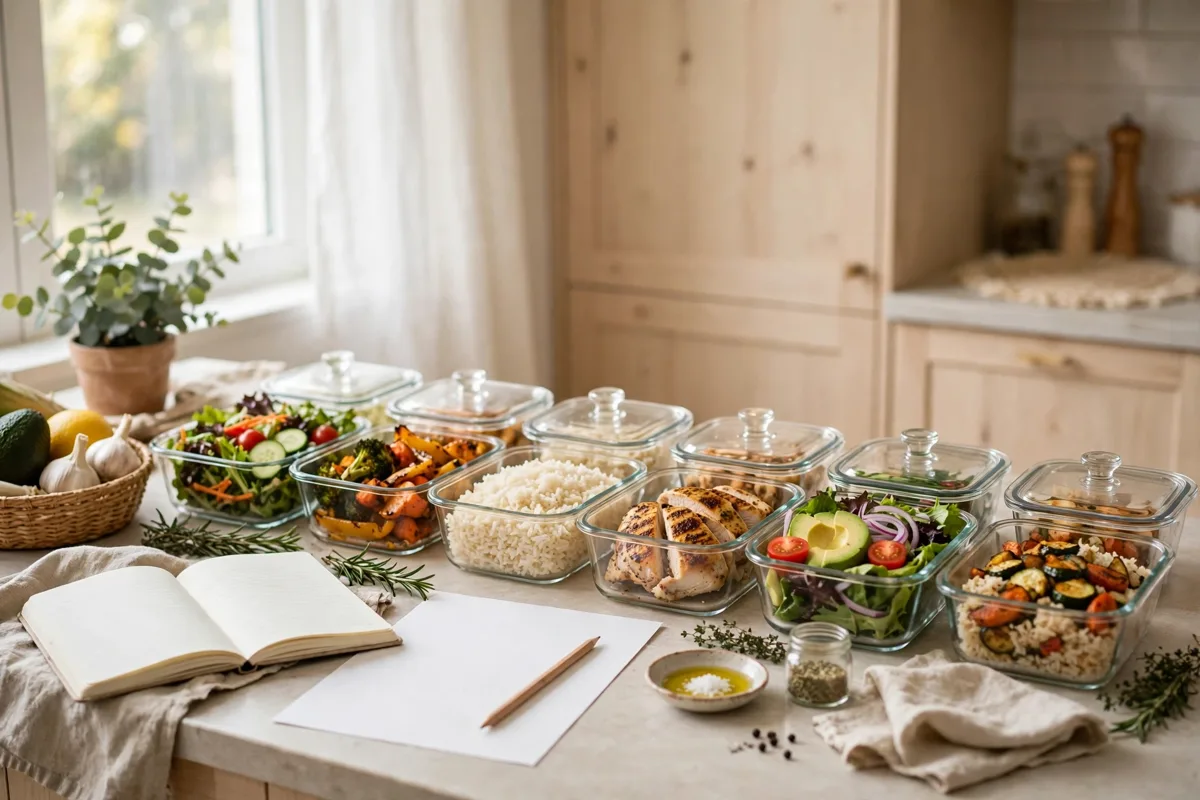
One relaxed hour at the weekend — cooking a grain, roasting a tray of vegetables, washing salad, portioning proteins — makes weeknight cooking mostly assembly. Component prep is more flexible than finished meals: the same roasted vegetables go into Monday’s pasta, Wednesday’s grain bowl, and Friday’s frittata. It is also how a planned week still feels spontaneous. The habit pairs well with a steady start to the day; our article on creating a successful morning routine shows how small prepared systems remove daily friction.
The Beginner’s Weekly Template
A simple first week might look like this: Sunday, a roast or big batch that yields leftovers; Monday, those leftovers reworked; Tuesday, a 20-minute stir-fry; Wednesday, the freezer backup or breakfast-for-dinner; Thursday, pasta with the prepped vegetables; Friday, flexible — takeaway, leftovers, or eating out; Saturday, the one new recipe, cooked without hurry. Two nights fully flexible is a feature, not a failure: plans people enjoy are plans people keep.
Mistakes That Kill New Meal Plans
Planning every meal of every day, choosing recipes with long ingredient lists, ignoring what is already in the cupboard, and treating one changed evening as a ruined week. Another classic: buying for the cook you wish you were. Plan for your energy, your budget, and your actual appetite, and the system quietly becomes a habit — the same way any home system sticks when it is designed around real life, a principle our budget-friendly home organisation ideas follow too.
Keep a Pantry That Makes Planning Easy
A small bench of staples turns a plan into food with almost no thought: rice, pasta, oats, tinned tomatoes and beans, onions and garlic, eggs, frozen vegetables and fruit, and a couple of sauces your household loves. With those in place, most planned dinners need only a protein and something fresh, and an unplanned night still produces a meal. Restock the bench from the running list, and planning stays light. Storage matters as much as buying: leftovers in clear containers at eye level get eaten; leftovers hidden at the back become science projects. Label batch-cooked food with the day it was made, freeze what will not be eaten in three days, and plan one “use it up” meal a week — the soup, stir-fry, or frittata that clears the fridge before the next shop.
Getting Started This Week
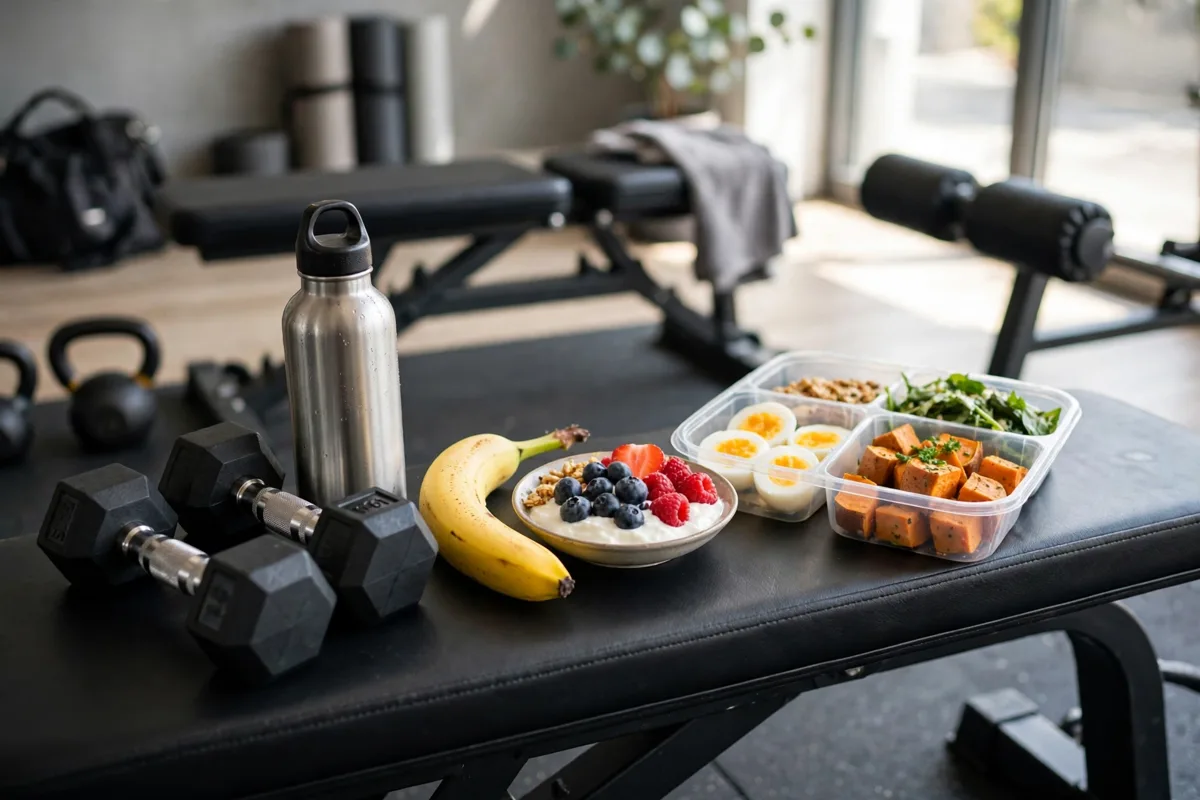
Do not overhaul anything. Plan just three dinners, shop once for them, and prep one grain and one tray of vegetables on Sunday. Notice how the evenings feel, then add a fourth dinner next week. Meal planning for beginners succeeds by being almost too easy — and within a month, the question changes from whether to plan to how you ever managed without it. If you are also eating around training, our guide to what to eat before and after a workout shows how to slot exercise fuel into the same weekly plan.