
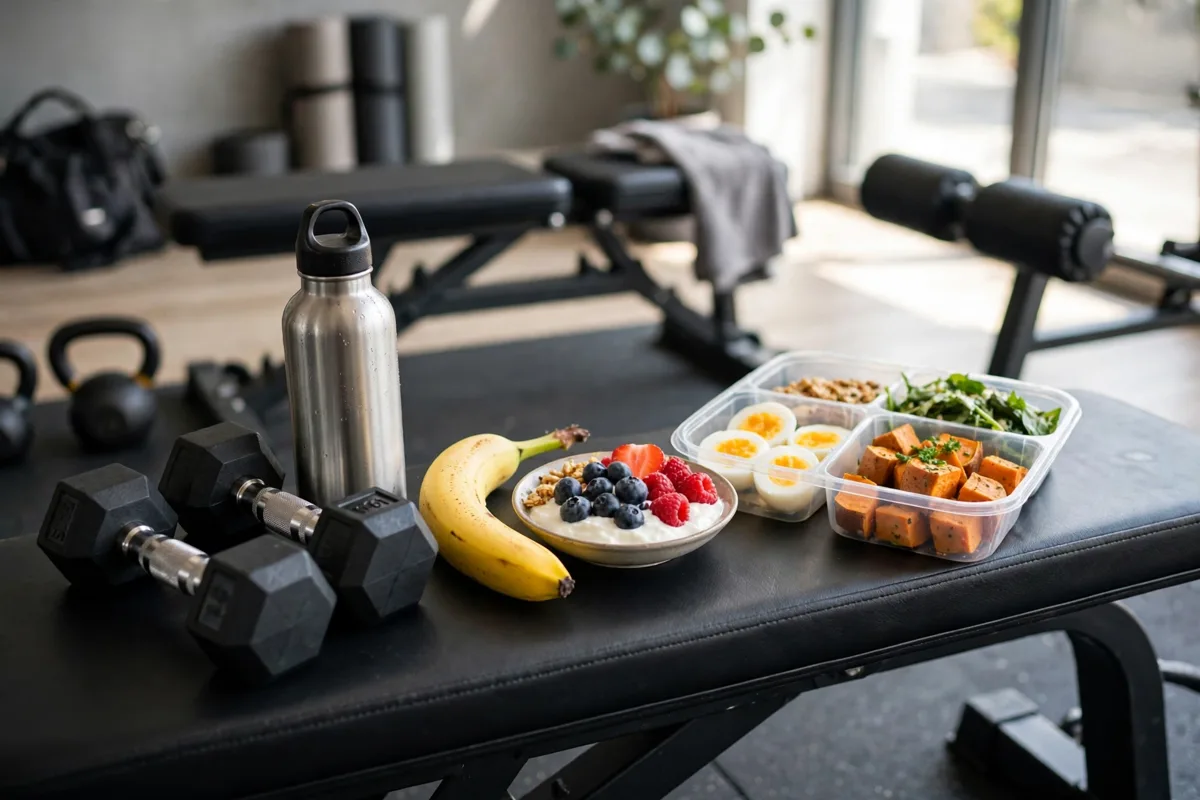
What you eat around exercise matters more than most fitness marketing suggests — and less complicatedly. The right food before a workout gives you energy to train well; the right food afterwards gives your body the building blocks to recover and adapt. Neither requires supplements, powders, or precise timing windows. This practical guide explains what to eat before and after a workout, in ordinary food, for ordinary people.
What to Eat Before a Workout
The pre-workout goal is simple: available energy without a heavy stomach. Carbohydrates are the body’s preferred training fuel, so the hours before exercise should lean towards them, with a little protein and modest fat and fibre — both slow digestion, which is welcome at other meals but not right before training.
Timing shapes the choice. Two to three hours before, a normal meal works: porridge with fruit, eggs on toast, rice with chicken, a sandwich. Thirty to sixty minutes before, keep it small and simple: a banana, a slice of toast with jam, a small yoghurt, a handful of raisins. Training first thing in the morning suits many people in a fasted or near-fasted state for easy sessions — our guide to building a successful morning routine shows how to make early training sustainable — but hard sessions usually go better with at least a small snack beforehand.
Hydration Is Part of the Meal
Arriving dehydrated quietly caps performance before the first set. Drink water steadily through the day rather than flooding yourself at the gym door, and take a bottle to every session. For most workouts under an hour, water alone is enough; very long or very hot sessions are the exception where electrolytes start to matter. Thirst plus pale-straw urine is a simple everyday guide that you are roughly on track.
What to Eat After a Workout
After training, the priorities are protein for muscle repair, carbohydrates to refill the fuel tank, and fluid. The famous 30-minute “window” is overstated for most people — what matters is that your next meal contains a solid serving of protein and enough total food across the day. If your next meal is hours away, a protein-containing snack bridges the gap: Greek yoghurt, a milk-based drink, eggs, a cheese sandwich, or leftover chicken.
Good everyday post-workout meals are unglamorous: chicken, rice, and vegetables; a tuna and bean salad; eggs on toast with fruit; a lentil soup with bread. This is where planning pays off — our meal planning for beginners guide shows how to keep one recovery-friendly meal ready in the fridge for training days, and the principles match our general healthy eating tips: regular meals, enough protein, mostly whole foods.
Does It Differ by Workout Type?
Strength training leans on the protein side afterwards — aim for a full protein serving at the next meal. Long endurance sessions lean on carbohydrates: bigger portions of rice, pasta, potatoes, or bread to refill stores, plus protein as usual. Short, easy sessions — a walk, gentle yoga, an easy cycle — need nothing special at all beyond your normal meals. Matching intake to effort, rather than eating “sports food” for every activity, keeps total calories sensible too.
Common Mistakes
Training hard on a completely empty stomach and wondering why the session felt awful. Eating a large, fatty meal an hour before running. Rewarding a 300-calorie workout with an 800-calorie “treat” every time. And copying elite athletes’ fuelling for amateur training volumes — their needs are genuinely different. The basics done consistently outperform every supplement stack: energy before, protein and carbohydrates after, water throughout.
The Simple Rule to Remember
Before: carbohydrates, light, timed to your stomach. After: protein plus carbohydrates at your next meal, and rehydrate. That is genuinely most of what to eat before and after a workout. Build those two habits into your week — ideally with the meals already planned — and your training will feel better within a fortnight.