
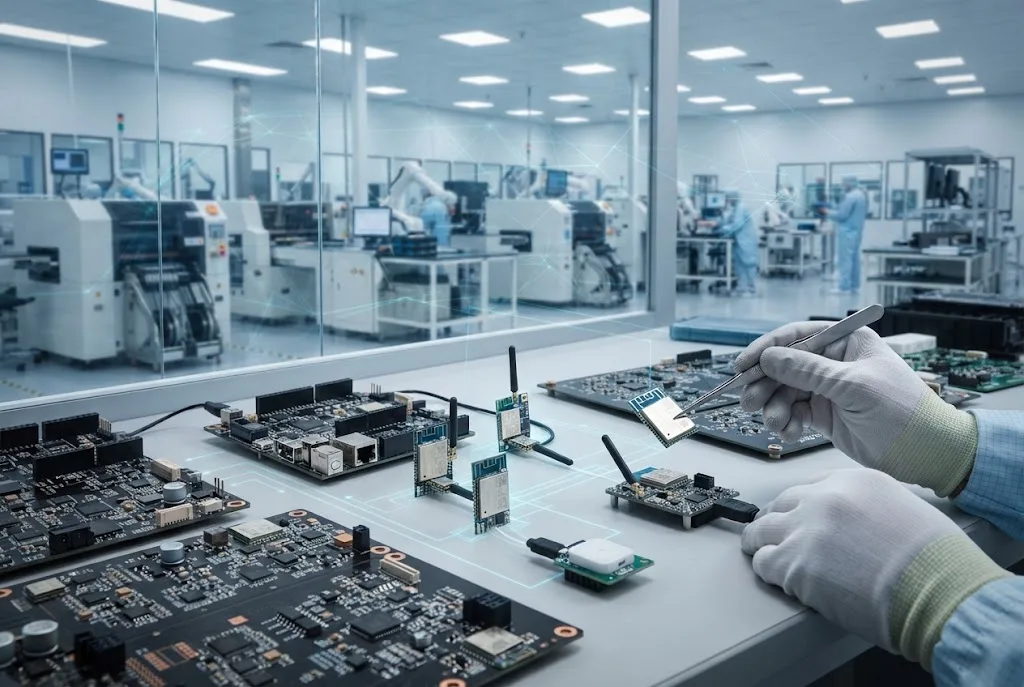
Founded in 2015, FN-LINK Technology focuses on wireless network communication and develops products spanning Wi-Fi, Bluetooth, Cat.1bis, PLC, millimeter wave, Sub1G, Zigbee, AIoT, and routing solutions. Its broader technology portfolio positions the company within the infrastructure behind many modern connected-device experiences.
For businesses evaluating connectivity technologies, understanding what companies such as FN-LINK provide can help clarify how wireless modules, IoT systems, manufacturing capabilities, and software support fit into a larger digital strategy.
What Is Hunan FN-Link Technology?
Hunan FN-Link Technology is associated with FN-LINK Technology Limited, a technology manufacturer focused on wireless communication products and solutions. Its activities include research and development, manufacturing, and sales of wireless communication modules, system solutions, peripheral equipment, and audiovisual equipment.
The company works across several connectivity technologies rather than relying on a single wireless standard. Its product categories include 2.4G and 5G Wi-Fi Bluetooth modules, Wi-Fi 6 modules, Wi-Fi BLE IoT modules, Bluetooth modules, AIoT solutions, PLC-IoT modules, Cat.1 modules, Wi-Fi dongles, and antennas.
This broad approach matters because connected products often require different communication technologies depending on their environment, power requirements, data needs, and intended application.
Why Wireless Connectivity Matters to Modern Businesses
Connectivity is no longer limited to computers and smartphones. Businesses increasingly operate equipment, appliances, sensors, vehicles, monitoring systems, and other devices that need to communicate with networks or cloud-based platforms.
A dependable wireless architecture can help businesses create connected products while supporting data exchange between devices and digital systems. This makes wireless communication an important component of the broader digital technology ecosystem.
The same principle can be seen in smart-building applications, connected consumer products, industrial environments, and event technologies. For example, RFID event technology demonstrates how connected technologies can help organizations manage physical environments through digital systems.
FN-LINK’s Wireless Technology Portfolio
One of FN-LINK’s notable strengths is the breadth of technologies represented within its product portfolio. Wi-Fi and Bluetooth remain central to many consumer and commercial products, while technologies such as AIoT, PLC-IoT, Cat.1bis, Zigbee, and other wireless communication solutions can address different connectivity requirements.
Wi-Fi and Wi-Fi 6
Wi-Fi modules provide network connectivity for a wide range of products. Wi-Fi 6 technology can be particularly relevant where newer connected devices require improved wireless performance and efficient network communication.
Businesses working with connected hardware can therefore evaluate Wi-Fi modules according to the device’s performance requirements, operating environment, network architecture, and target market.
Bluetooth and BLE
Bluetooth and Bluetooth Low Energy are widely used for short-range communication between devices. BLE can be useful for applications where low-power communication is important, including sensors, accessories, smart devices, and other connected products.
AIoT and Smart Devices
The combination of artificial intelligence and the Internet of Things is creating new possibilities for connected products. AIoT solutions can connect physical devices with software systems, sensors, data processing, and intelligent automation.
This direction is particularly relevant as companies explore smart-home technology and connected environments where devices need to exchange information consistently.
Applications Across Different Industries
Wireless communication modules can serve many different industries because connectivity is a component rather than a complete end product. The same underlying communication technology can be adapted for different hardware and software environments.
Consumer Electronics
Connected televisions, computers, tablets, speakers, gaming devices, surveillance equipment, and other consumer products can depend on wireless modules for network communication.
This creates opportunities for manufacturers to build connectivity directly into products rather than treating networking as a separate add-on.
Smart Homes and Appliances
Smart appliances increasingly rely on wireless communication to interact with mobile applications, home networks, cloud services, and other connected devices. Refrigerators, air conditioners, cleaning appliances, lighting products, and other equipment can become part of broader connected ecosystems.
For businesses developing these products, connectivity must be considered alongside hardware design, software, security, power consumption, and user experience.
Smart Cities
Connected infrastructure represents another important application area. Smart parking, street lighting, environmental monitoring, alarms, and connected buildings can use communication technologies to exchange information across distributed systems.
These applications demonstrate how wireless connectivity can extend beyond individual products and become part of larger infrastructure networks.
Commercial and Industrial Equipment
Commercial equipment can benefit from connected monitoring, remote communication, diagnostics, and data collection. In manufacturing environments, connectivity can also complement broader digital processes and operational systems.
Businesses exploring modern manufacturing strategies increasingly need to consider how technology investments interact with production efficiency, data visibility, and long-term operational planning.
Manufacturing and Production Capabilities
Connectivity technology requires more than product design. Consistent manufacturing, testing, quality control, and supply-chain coordination are also important when producing communication modules at scale.
FN-LINK states that it operates automated production and testing systems, including FUJI high-precision placement lines, automated wireless-product testing lines, and assembly production lines. The company reports production and testing capacity of up to 400KPCS per day and annual intelligent IoT module output of 120 million units.
These capabilities illustrate why manufacturing infrastructure can be an important consideration when businesses evaluate technology suppliers. Product specifications matter, but so do production consistency, testing processes, technical support, and the ability to support larger deployments.
Quality and electronics manufacturing standards are also important considerations for connected hardware. Businesses researching electronics quality assurance can better understand why manufacturing quality plays a major role in the reliability of electronic products.
Digital Transformation Behind the Manufacturing Process
FN-LINK also describes a broader digital management structure involving ERP, PLM, MES, SCM, CRM, and OA systems. Integrating these systems can help manufacturers connect different parts of their operations, from product development and production to supply-chain coordination and customer management.
Digital transformation is especially important when technology companies operate across multiple product categories and markets. Better information flow can support operational visibility and coordination across departments.
The importance of this approach extends beyond manufacturers. Companies in many sectors are adopting digital strategies to improve processes, customer interactions, and decision-making. Our guide to digital transformation in advertising and marketing explores another example of how technology is changing established business processes.
Technical Support and Software Integration
Hardware is only one part of a successful connectivity solution. Businesses also need software, drivers, development resources, documentation, and technical support when integrating wireless modules into their products.
FN-LINK highlights software support, SDK and driver resources, product documentation, FAQs, and technical assistance as part of its broader IoT support structure.
This type of support can be valuable because product developers must often solve integration challenges involving hardware compatibility, software communication, network configuration, testing, and deployment.
For organizations undergoing broader technology modernization, digital technology platforms also demonstrate the importance of reliable access and system integration within connected environments.
Why IoT Connectivity Can Support Business Growth
IoT connectivity can create new opportunities by allowing businesses to collect information from physical products and environments. Connected systems can support monitoring, automation, remote communication, maintenance workflows, and improved customer experiences.
For example, a manufacturer may connect equipment to monitoring software, while a smart-home company may allow users to control appliances through a mobile application. A commercial building may use connected sensors for environmental monitoring or operational management.
The commercial value depends on how effectively connectivity is integrated into the overall business model. Technology alone does not guarantee better performance. Companies still need a clear use case, appropriate hardware, reliable software, strong security practices, and effective operational processes.
This broader relationship between technology and business strategy is also relevant to the future of small business, where digital tools increasingly influence how companies operate and compete.
Key Considerations When Choosing a Connectivity Partner
Businesses evaluating wireless module manufacturers should look beyond a product name or single specification. Several factors can influence whether a technology partner is appropriate for a particular project.
- Technology compatibility: The module should support the communication standards required by the product.
- Product integration: Hardware should fit the device’s physical, electrical, and software requirements.
- Manufacturing capacity: Production capabilities should match expected demand and growth.
- Testing and quality: Consistent testing is important for dependable electronics.
- Technical support: Developers may require documentation, drivers, SDK resources, and integration assistance.
- Compliance: Businesses should verify the certifications and regulatory requirements applicable to their target markets.
- Long-term availability: Product lifecycle and supply continuity matter for hardware businesses.
- Scalability: The supplier should be able to support the project as production requirements increase.
Companies making larger technology investments may also benefit from understanding how business investment decisions can support long-term growth.
FN-LINK and the Future of Connected Business
The future of business connectivity is likely to involve increasingly integrated combinations of wireless communication, IoT, automation, cloud services, intelligent software, and connected infrastructure.
As more physical products become digitally connected, manufacturers will need technologies that can support communication without making products unnecessarily complex. Wireless modules can provide an important bridge between physical hardware and digital platforms.
FN-LINK’s focus on multiple wireless technologies, IoT solutions, manufacturing, and technical support reflects this broader direction. Its product portfolio gives businesses multiple connectivity options depending on the requirements of their projects.
The company’s development also fits into a wider technology landscape in which connected systems are influencing manufacturing, smart cities, consumer electronics, commercial equipment, and digital services. Businesses interested in sustainable technology development can also explore cleantech and digital technology strategies as connectivity becomes increasingly important across industries.
Conclusion
Hunan FN-Link Technology represents an example of how wireless communication manufacturers are supporting the infrastructure behind today’s connected economy. Through Wi-Fi, Bluetooth, IoT, AIoT, PLC, Cat.1bis, and other technologies, wireless modules can help businesses create products and systems capable of communicating with digital environments.
For companies evaluating a connectivity partner, the most important consideration is not simply the availability of a wireless module. Manufacturing capacity, technical support, product integration, quality systems, compliance, scalability, and long-term supply should all be evaluated together.
As businesses continue moving toward connected products and intelligent operations, companies with strong wireless communication capabilities can play an important role in turning physical devices into practical parts of the digital ecosystem.
Frequently Asked Questions
What does FN-LINK Technology manufacture?
FN-LINK focuses on wireless communication modules, system solutions, peripheral equipment, audiovisual equipment, and related connectivity technologies.
What wireless technologies does FN-LINK support?
Its portfolio includes Wi-Fi, Bluetooth, Wi-Fi 6, Cat.1bis, PLC, millimeter wave, Sub1G, Zigbee, AIoT, and routing solutions.
Where is FN-LINK Technology based?
FN-LINK’s company information identifies its headquarters and manufacturing operations in Hunan, with additional operations including a Shenzhen branch and Hangzhou subsidiary.
Why are wireless modules important for businesses?
Wireless modules allow products and systems to communicate with networks and other connected devices, supporting applications ranging from consumer electronics and smart appliances to IoT and smart-city infrastructure.
What should businesses consider before selecting a wireless module supplier?
Businesses should evaluate technical compatibility, product integration, manufacturing capacity, quality control, regulatory requirements, technical support, product lifecycle, and scalability.