
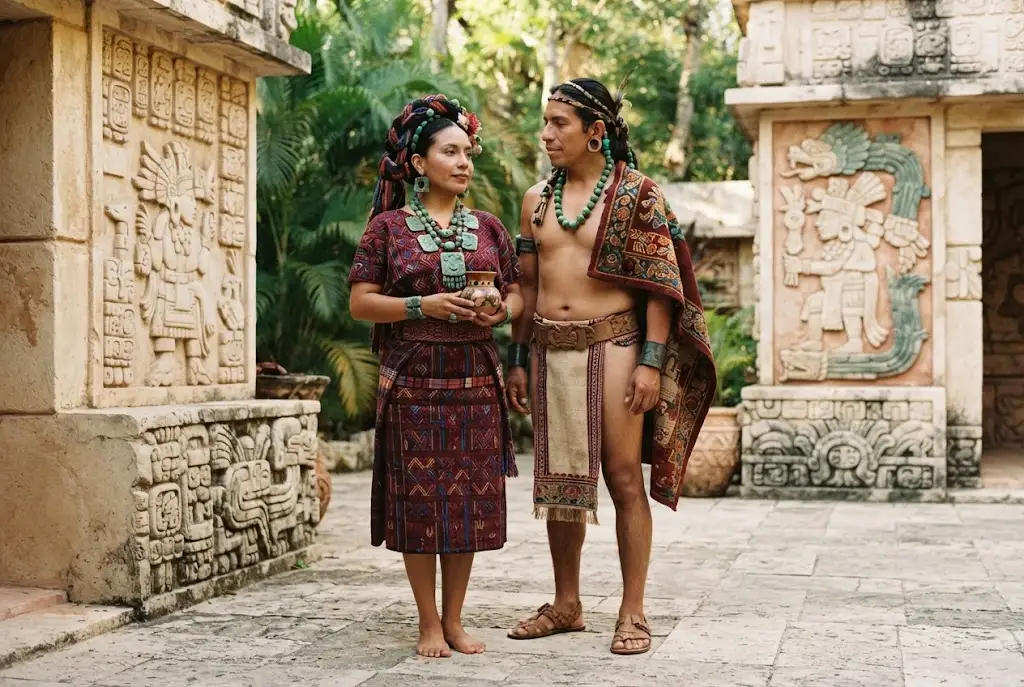
Modern interest in Maya aesthetics often focuses on distinctive practices such as cranial modification, dental decoration, elaborate hairstyles, jewelry, textiles, and body adornment. However, these practices should be understood within their historical and cultural context rather than judged only through modern ideas of beauty.
This guide explores the major elements associated with ancient Maya appearance and explains why Maya beauty standards continue to attract attention in modern fashion, beauty, art, and cultural discussions.
What Were Mayan Beauty Standards?
Mayan beauty standards were not a single universal checklist followed by every Maya person. The Maya civilization consisted of different communities and political centers across Mesoamerica over many centuries, so customs could vary by period, region, social position, and cultural setting.
Archaeological evidence, sculpture, murals, ceramics, inscriptions, and surviving material culture provide clues about how appearance was presented and modified.
Several recurring themes appear in discussions of Maya aesthetics:
- Intentional modification of physical appearance
- Elaborate hairstyles and head adornments
- Decorative dental practices
- Jewelry and body ornaments
- Paint, cosmetics, and grooming
- Distinctive textiles and ceremonial clothing
- Visual symbols associated with status and identity
These elements demonstrate that appearance could function as a form of communication rather than simply personal decoration.
Cranial Modification and the Maya Ideal of Appearance
One of the most recognizable practices associated with ancient Maya appearance was intentional cranial modification. The practice involved shaping the developing skull during infancy using controlled pressure and binding techniques.
Archaeological remains demonstrate that cranial modification occurred in Maya communities. The resulting head shapes are visible in representations of people found in Maya art.
It is important, however, to avoid reducing the practice to a single explanation. Researchers have connected cranial modification with identity, social and cultural traditions, and ideas about appearance. Its meaning could differ across communities and periods.
For the Maya, physical appearance could therefore become a visible expression of belonging and cultural identity.
Dental Modification as an Expression of Identity
Dental modification was another striking element of ancient Maya aesthetics. Archaeological evidence shows that some Maya people altered the shape of their teeth and, in certain cases, incorporated decorative materials into the teeth.
Dental decoration was not simply equivalent to modern cosmetic dentistry. It existed within a broader cultural system in which the body could be deliberately modified and decorated.
Because dental modification required specialized knowledge and careful technique, the practice also demonstrates the technical sophistication involved in ancient body decoration.
Hairstyles and Hair Adornment
Hair was an important part of personal presentation in Maya art. Sculptures, ceramics, murals, and other representations frequently depict elaborate hairstyles and head ornaments.
Hair could be arranged, braided, decorated, or combined with other forms of adornment. Headpieces and ornaments could contribute to the overall appearance of rulers, religious figures, warriors, and other individuals represented in Maya visual culture.
Studying these representations helps modern audiences understand how hairstyle could work alongside clothing and jewelry to create a complete visual identity.
Jewelry and Body Adornment
Jewelry played an important role in Maya visual culture. Materials such as jade, shell, bone, stone, and other resources were fashioned into ornaments used for personal and ceremonial purposes.
Jade is particularly significant in discussions of Maya material culture. Its distinctive color, rarity, and use in important objects made it an especially meaningful material.
Ornaments could include:
- Ear ornaments
- Necklaces
- Pendants
- Bracelets
- Beads
- Head ornaments
- Ceremonial objects
The visual effect of these materials was part of a larger system of presentation in which color, shape, craftsmanship, and symbolism worked together.
Clothing and Textiles in Maya Beauty
Clothing was another essential part of appearance. Maya textile traditions included woven garments, patterned fabrics, decorative elements, and distinctive regional styles.
Clothing could communicate information about a person’s role, community, status, and ceremonial context. In representations of Maya rulers and elites, garments often appear together with elaborate jewelry, headdresses, and other visual markers.
This relationship between clothing and identity remains relevant to modern fashion. Our guide to 1920s fashion and cultural style explores another historical example of how clothing can communicate identity beyond basic function.
Similarly, the discussion of fashion and personal style shows how modern audiences continue to use clothing as a form of self-expression.
Natural Pigments, Paint, and Cosmetics
Color was an important part of Maya visual culture. Natural pigments were used in art, ritual contexts, and forms of personal presentation.
Red, black, blue, and other colors appear prominently in Maya material culture, although the meaning and use of particular pigments could vary depending on context.
It is tempting to describe ancient Maya cosmetic practices as an early version of modern skincare or makeup, but that comparison has limitations. Ancient practices had cultural and ceremonial meanings that cannot always be translated directly into contemporary beauty routines.
Modern readers interested in beauty history can nevertheless use these practices to understand an important point: societies have always developed their own approaches to color, grooming, presentation, and personal appearance.
Maya Beauty and Social Status
Appearance could also communicate social position. In Maya art, rulers and other prominent individuals are frequently represented wearing elaborate clothing, jewelry, headdresses, and other distinctive forms of adornment.
These visual elements helped construct an image of authority. The combination of clothing, body presentation, ornaments, and posture created a recognizable social identity.
That concept has parallels in many later societies. Clothing, jewelry, hairstyles, and other visual signals have repeatedly been used to communicate wealth, authority, occupation, community membership, or cultural affiliation.
Beauty, Ritual, and the Sacred
Ancient Maya ideas about appearance cannot always be separated from religious and ceremonial life. Some forms of adornment appear in contexts connected with ritual, rulership, performance, and representations of deities or supernatural beings.
This is one reason it is misleading to describe Maya beauty standards as purely cosmetic. Appearance could participate in larger systems of religion, politics, identity, and social organization.
Headdresses, body ornaments, painted surfaces, textiles, and other visual elements could contribute to a ceremonial presentation that communicated far more than physical attractiveness.
The Role of Jade in Maya Aesthetics
Jade holds an especially important place in discussions of Maya art and adornment. Maya artisans created beads, pendants, masks, ornaments, and other objects from jade and related greenstone materials.
The material’s color and rarity contributed to its significance. Jade objects could be associated with wealth, prestige, ritual activity, and elite presentation.
This historical appreciation of precious materials has an interesting connection with modern fashion and luxury design, where the choice of materials can communicate craftsmanship and status.
Readers interested in contemporary luxury aesthetics can also explore modern ideas surrounding luxury and sustainability.
Beauty Was Not the Same for Everyone
One of the most important points when discussing Mayan beauty standards is that there was no single Maya beauty ideal that applied equally to every person.
The Maya civilization existed for a very long period and covered a large geographical area. Different communities developed their own traditions, while social roles and historical periods also influenced how people presented themselves.
Elite representations preserved in monumental art should therefore not automatically be treated as evidence of everyday appearance for the entire Maya population.
This distinction helps prevent modern discussions from turning a complex civilization into a simplified beauty stereotype.
How Maya Art Helps Us Understand Beauty
Maya artists left an extraordinary visual record. Sculptures, ceramics, murals, monuments, and other works depict people wearing different garments, hairstyles, ornaments, and body decorations.
These representations provide valuable evidence, although they should be interpreted carefully. Artistic representations are not photographs, and artists could emphasize particular features for political, religious, or symbolic reasons.
Even so, the visual record demonstrates how important appearance was within Maya culture.
Mayan Beauty Standards and Modern Fashion
Ancient Maya motifs continue to influence modern visual culture. Designers, artists, photographers, and fashion enthusiasts sometimes draw inspiration from Maya architecture, patterns, colors, jewelry, textiles, and decorative forms.
However, inspiration should be distinguished from historical accuracy. A modern garment featuring a Maya-inspired geometric pattern does not necessarily reproduce an authentic ancient Maya textile.
This distinction is especially important when discussing cultural heritage. Borrowing visual elements without understanding their origin can turn complex traditions into generic decorative motifs.
For a broader look at how historical styles continue to influence modern clothing, see our guide to fast fashion and changing style trends.
You can also explore the role of fashion careers and merchandising through our article on a fashion merchandising internship.
Maya Beauty Compared With Modern Beauty Ideals
Comparing ancient Maya aesthetics with modern beauty standards can reveal how much ideas about attractiveness change over time.
Modern beauty culture often emphasizes skin appearance, body shape, hair, makeup, fashion, and digital presentation. Ancient Maya communities had their own systems of grooming, modification, clothing, and adornment.
Neither system should automatically be treated as more natural or more sophisticated. Beauty standards are shaped by culture, technology, social structures, available materials, and historical circumstances.
Our article on beauty beyond physical appearance provides another perspective on how societies can interpret beauty differently.
Why People Are Still Fascinated by Maya Beauty
Interest in Maya beauty standards continues partly because the archaeological record provides such vivid examples of intentional personal presentation.
The practices are visually distinctive, but they also raise broader questions:
- Why do societies modify the human body?
- How does clothing communicate identity?
- Why do certain materials become symbols of status?
- How does religion influence appearance?
- Why do beauty standards change over time?
- How should modern audiences interpret historical beauty practices?
These questions make Maya aesthetics relevant far beyond the subject of physical appearance.
The Difference Between Historical Study and Modern Recreation
Modern interest in ancient beauty should be approached thoughtfully. Some historical practices involved permanent physical modification or procedures that should not be casually reproduced.
Learning about a historical practice is different from attempting to recreate it. Museum collections, archaeological research, academic publications, and reputable cultural institutions provide safer ways to explore the subject.
Modern skincare and beauty products inspired by historical ingredients should also not automatically be treated as equivalent to ancient preparations. Historical use of a plant, pigment, or material does not by itself establish modern cosmetic effectiveness or safety.
What Mayan Beauty Standards Teach Us About Beauty
The most valuable lesson from studying Maya aesthetics is that beauty is deeply connected to culture.
What one society considers attractive, prestigious, sacred, or appropriate may be completely different from the preferences of another society. Body modification, jewelry, hairstyle, clothing, and cosmetics can all become cultural languages.
The Maya demonstrate how appearance can communicate identity and belonging while also reflecting wider systems of social organization and belief.
Frequently Asked Questions
What were the main Mayan beauty standards?
Ancient Maya beauty and appearance practices included cranial modification, dental decoration, elaborate hairstyles, jewelry, textiles, body adornment, pigments, and ceremonial presentation. Practices varied by community, period, and social position.
Why did the Maya practice cranial modification?
Cranial modification was practiced in some Maya communities and appears in archaeological remains and artistic representations. Its meanings likely varied, with connections to identity, cultural tradition, and social context rather than one universal explanation.
Did the Maya decorate their teeth?
Yes. Archaeological evidence shows that some Maya people modified their teeth and used decorative techniques involving the teeth. These practices formed part of broader traditions of body modification and adornment.
What materials did the Maya use for jewelry?
Maya artisans worked with materials including jade and other greenstones, shell, bone, stone, and other locally or regionally available resources. The significance of a particular object depended on its material, craftsmanship, use, and cultural context.
Did the Maya use makeup?
Pigments and colored substances were used in Maya visual and ceremonial culture, but modern concepts of makeup and cosmetics should not be directly imposed on every ancient practice. The purpose and context of pigments varied.
Why are Mayan beauty standards still popular today?
Modern audiences remain interested because Maya art provides striking examples of body modification, jewelry, hairstyles, textiles, and ceremonial appearance. These subjects also connect beauty with larger questions about culture, identity, history, and social status.
Final Thoughts
Mayan beauty standards were much more complex than a simple definition of physical attractiveness. Across different Maya communities and historical periods, appearance could involve body modification, dental decoration, hairstyles, jewelry, textiles, pigments, and ceremonial presentation.
Understanding these practices within their historical context reveals an important truth about beauty: standards are never completely universal. They develop through culture, belief, social organization, available materials, and changing ideas of identity.
The enduring fascination with Maya aesthetics is therefore not simply about recreating an ancient look. It is about understanding how one of Mesoamerica’s most influential civilizations used appearance as a powerful form of cultural expression.