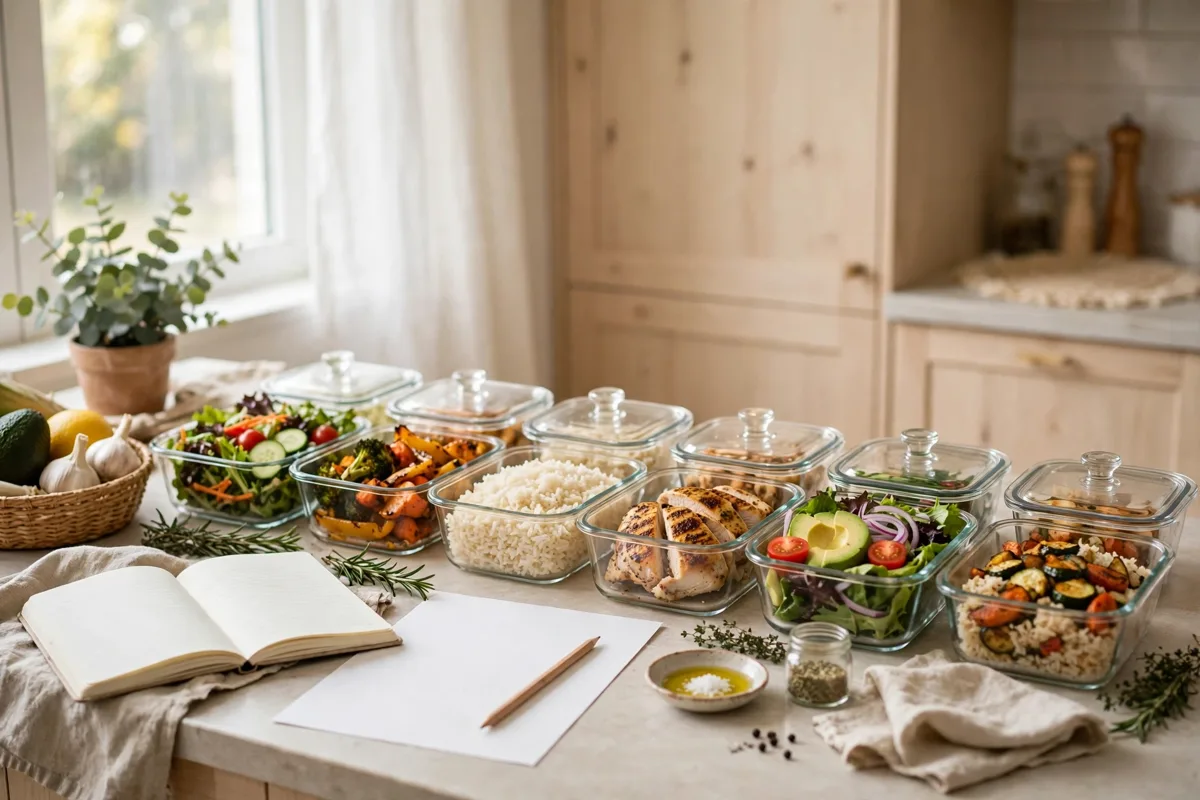
The front of a food packet is advertising. The back is the truth. Learning how to read food labels is one of the highest-value skills in a supermarket, because two products that look identical on the shelf can be wildly different in sugar, salt, and actual nourishment. The good news is that labels follow a standard layout, and once you know where to look, a ten-second scan tells you almost everything. This beginner’s guide walks through each part of the label in the order your eyes should visit it, so your next grocery trip gets faster and your basket gets smarter. It pairs naturally with our meal planning for beginners guide, because planning and label-reading together are what turn good intentions into good meals.
Start With the Serving Size, Not the Calories
Every number on a nutrition label is built on the serving size at the top, and this is where manufacturers quietly flatter their products. A small chocolate bar labelled as two servings, or a bottled drink counted as two and a half, makes every figure that follows look gentler than the way you will actually consume it. Before reading anything else, check the serving size and the servings per container, then scale the numbers to the portion you will really eat or drink.
Calories come next, and they matter, but mostly as context. A 400-calorie ready meal packed with vegetables, grains, and protein is a completely different proposition from 400 calories of biscuits. Calories tell you how much energy a food provides; the rest of the label tells you what that energy is made of, which is the part that decides how you feel an hour later.
How to Read Food Labels: The Five Numbers That Matter Most
After serving size, five figures deserve your attention. First, sugars, and specifically added sugars where the label separates them. As a rough guide, more than about 22 grams of sugar per 100 grams is high, and less than 5 grams is low. Second, salt or sodium: above 1.5 grams of salt per 100 grams is high, below 0.3 grams is low, and bread, sauces, and processed meats are the usual hiding places. Third, saturated fat, where under 1.5 grams per 100 grams counts as low and over 5 grams as high.
Fourth, fibre, the number most people ignore and shouldn’t: 3 grams or more per 100 grams is a useful source, and 6 grams or more is genuinely high. Fifth, protein, which helps meals satisfy; compare similar products and favour the one offering more protein and fibre for similar calories. These five checks, sugars, salt, saturated fat, fibre, and protein, cover the vast majority of everyday decisions. Our broader healthy eating tips use the same priorities, because they reflect how food actually affects energy, hunger, and long-term health.
The Ingredients List: Shorter Is Usually Better
Ingredients are listed in descending order by weight, so the first three items tell you what the product mostly is. If sugar, in any of its disguises, appears in the top three of something marketed as wholesome, you have learned what you needed to know. Sugar hides under many names: syrup, glucose, fructose, dextrose, maltose, honey, agave, fruit juice concentrate, and more. Different names, same job.
A long ingredients list is not automatically bad, a muesli will naturally list many grains, fruits, and nuts, but a long list full of flavourings, colours, emulsifiers, and sweeteners usually signals a heavily processed product. A useful habit is to ask whether you could, in principle, find most of the ingredients in a home kitchen. If yes, the food is probably close to its natural form. If the list reads like a chemistry practical, treat it as an occasional food rather than a staple.
Front-of-Pack Claims, Translated
Marketing phrases have legal definitions, and they are often weaker than they sound. “Low fat” can still mean high sugar, because removing fat usually means adding something else for flavour. “No added sugar” does not mean sugar-free; the product may contain plenty of naturally occurring sugars from fruit concentrates. “Light” or “lite” may refer to colour or taste rather than calories. “Wholegrain” is worthwhile only when wholegrain flour is the first ingredient, not a sprinkle behind refined flour.
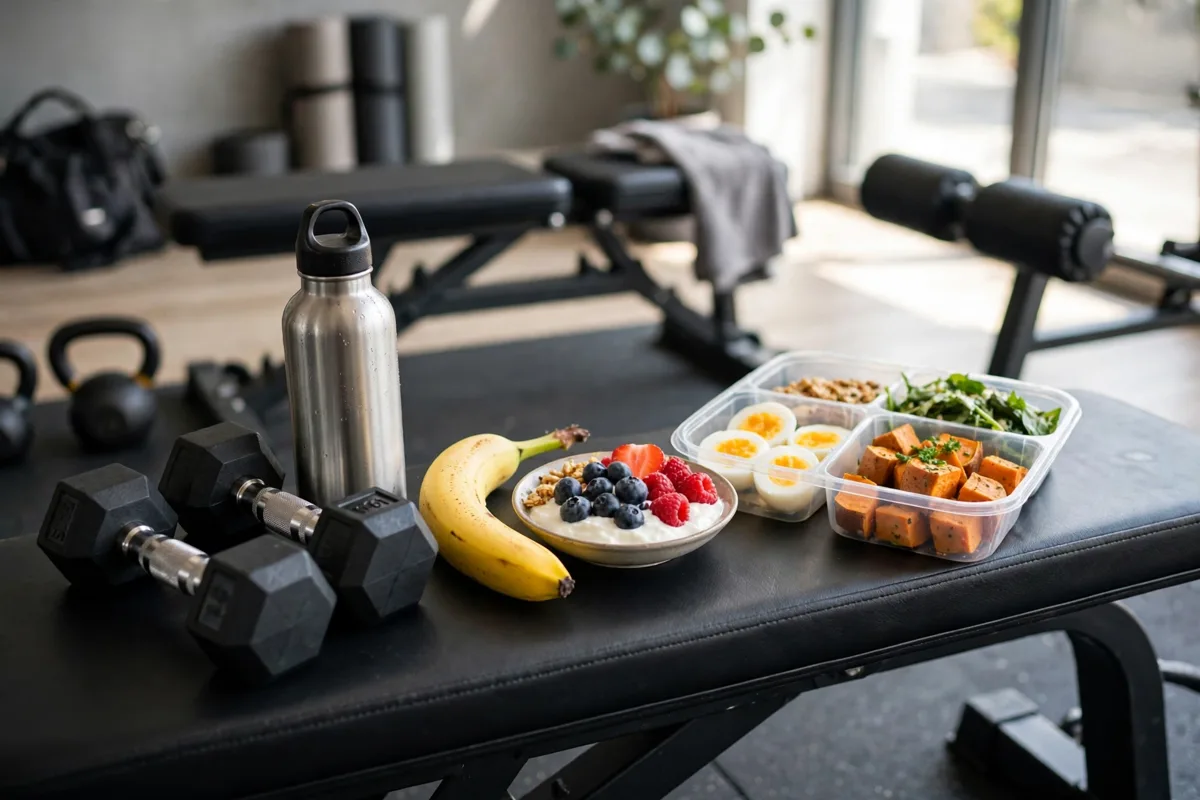
Traffic-light labels, where they appear, are the honest shortcut: greens good, ambers fine in moderation, reds worth limiting. But even without them, the five-number check from earlier will cut through most claims. Athletes and active readers use exactly this scan when choosing training food, as our guide to what to eat before and after a workout shows: the label, not the slogan, decides what goes in the basket.
Comparing Two Products in Ten Seconds
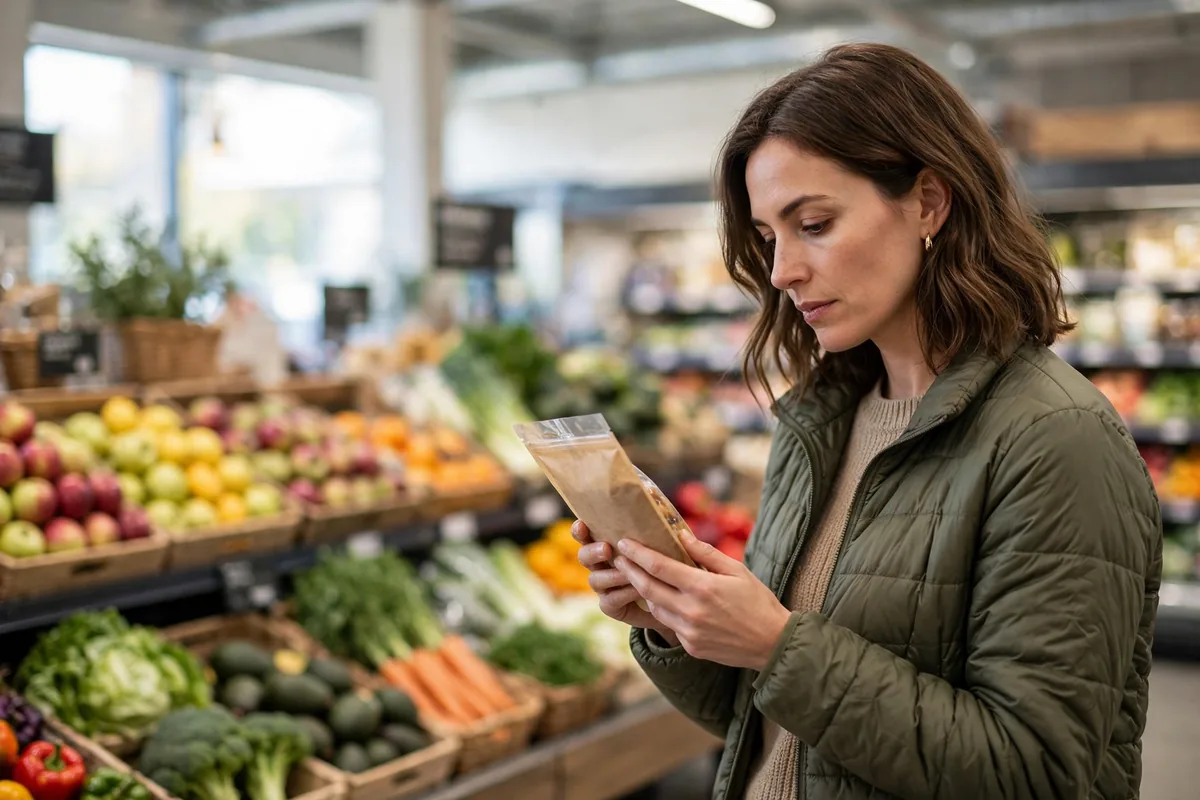
Here is the full routine in practice. Pick up the two rival products, turn both around, and compare per 100 grams, never per serving, because serving sizes differ between brands. Glance at sugar and salt first; the lower product wins unless the difference is trivial. Check saturated fat the same way. Then look at fibre and protein, where higher wins. Finally, sanity-check the ingredients list for anything in the top three that surprises you.
Ties are common, and when the numbers are close, choose the one you will genuinely enjoy, because the healthiest product is the one that does not end up wasted at the back of the cupboard. This whole comparison takes about ten seconds once practised, roughly the time the front of the packet was designed to hold your attention. Habits beyond the shop matter too; even your mornings play a part, as our piece on creating a successful morning routine describes.
Making Label Reading a Habit, Not a Chore
You do not need to audit every item you buy. Read labels closely for the twenty or so products you purchase every week, the breads, cereals, sauces, snacks, yoghurts, and ready meals that quietly make up most of your diet. One careful pass through your regular basket will improve hundreds of future meals, because those staple choices repeat all year.
From there it becomes automatic. Your eye learns to find the sugar line the way it finds a price tag, and the occasional treat stays a treat rather than a surprise. That is the real promise of learning how to read food labels: not anxiety about food, but quiet confidence that what you are buying is what you think it is. For putting it all together on the road as well as at home, see our guide to staying healthy while traveling.