
For many readers, the search for beauty fades scripture is really a search for something deeper: What does the Bible say about aging, appearance, self-worth, character, and lasting beauty? The answer can be found by looking at several passages together rather than treating one verse as an isolated statement.
This guide explores the biblical meaning of “beauty fades,” the well-known passage in Proverbs 31:30, related teachings about inner character, aging, relationships, faith, and practical ways to develop a healthier understanding of beauty.
What Does “Beauty Fades” Mean in Scripture?
The expression most commonly associated with “beauty fades” comes from Proverbs 31:30, which contrasts charm and physical beauty with reverence for God. The central message is not that physical beauty has no value. Rather, the verse places it below qualities that are deeper and more enduring.
Physical appearance changes throughout life. Youth changes into maturity, facial features change, hair may change, and the standards used by society to define attractiveness also change. Scripture uses this reality to direct attention toward qualities that are not dependent on age or appearance.
In that sense, “beauty fades” is less about criticizing physical appearance and more about understanding its limitations. A person’s appearance cannot fully define their identity, character, relationships, or spiritual life.
Proverbs 31:30 and the Meaning of Lasting Beauty
Proverbs 31:30 is central to conversations about biblical beauty because it distinguishes temporary outward qualities from a deeper form of worth.
“Charm is deceptive, and beauty is fleeting; but a woman who fears the Lord is to be praised.”
The verse presents a clear priority. Charm can influence how someone is perceived, and physical beauty can certainly attract attention, but neither should become the foundation of a person’s value.
The reference to fearing the Lord points toward reverence, faith, wisdom, and a life oriented toward God. In the context of the wider Proverbs 31 passage, this value is demonstrated through conduct, responsibility, generosity, diligence, and care for others.
That broader context matters. Biblical beauty is not simply an invisible quality that exists inside someone’s thoughts. It can become visible through actions.
Does the Bible Say Physical Beauty Is Bad?
No. Scripture does not present personal appearance as inherently wrong.
The Bible contains many passages in which physical appearance is acknowledged. Beauty, attractiveness, clothing, jewelry, grooming, and presentation appear in different biblical contexts. The issue is not whether a person can be attractive. The deeper issue is whether appearance becomes the primary measure of worth.
A healthy biblical perspective can therefore make room for both self-care and humility. Someone can appreciate clothing, skincare, grooming, or personal style without allowing those things to determine their identity.
For readers interested in how different cultures have understood appearance, the discussion of Mayan beauty standards and ancient Maya aesthetics provides a useful cultural comparison. Ideas about beauty have never been identical across societies or historical periods.
1 Peter 3:3-4 and the Idea of Inner Beauty
Another important passage appears in 1 Peter 3:3-4. The passage directs attention away from making outward adornment the primary source of beauty and toward what it describes as the inner self.
The passage is often discussed because of its description of an “unfading” quality associated with character and spirit. That language provides an important contrast with physical appearance, which naturally changes with time.
The practical lesson is not that clothing, jewelry, hairstyles, or grooming are automatically wrong. Instead, the passage challenges the idea that external presentation should be the foundation of personal worth.
This distinction is especially relevant in an age when appearance can be constantly displayed, compared, edited, and evaluated online.
Why Physical Beauty Naturally Changes With Age
Aging is one of the clearest reminders that physical appearance is temporary.
Skin changes, hair changes, facial structure changes, and the body develops through different stages of life. These changes are normal parts of being human rather than personal failures.
Modern culture can sometimes make aging appear like a problem that must always be corrected. Advertising, entertainment, social media, and beauty industries can create the impression that looking young is the ultimate goal.
A biblical understanding of aging offers another perspective. Growing older can also mean gaining experience, wisdom, patience, perspective, and opportunities to guide younger generations.
The emphasis shifts from asking, “How can I remain exactly as I was?” to asking, “How can I live meaningfully in this stage of life?”
Psalm 71 and the Value of Growing Older
Psalm 71 contains a powerful reflection on old age and the responsibility of sharing experience with another generation. Rather than presenting old age as a period without purpose, the passage connects later life with testimony, remembrance, and teaching.
This perspective changes the way aging can be understood.
- Age can bring experience.
- Experience can develop wisdom.
- Wisdom can benefit other people.
- Life experience can strengthen compassion.
- A person’s influence does not have to disappear when youthful appearance changes.
From this viewpoint, aging does not mean losing all forms of beauty. It can reveal forms of beauty that were less visible earlier in life.
Inner Beauty Is Expressed Through Character
If physical appearance is temporary, what makes inner beauty recognizable?
Scripture repeatedly points toward qualities such as kindness, humility, patience, faithfulness, compassion, self-control, generosity, and love. These qualities are not dependent on facial features or physical age.
They also become visible through behavior.
A kind person creates beauty through kindness. A patient person creates beauty through patience. A generous person creates beauty through generosity. A person who consistently treats others with dignity can leave an impression that lasts much longer than a particular hairstyle, outfit, or physical feature.
This is why discussions about lasting beauty and personal worth should ultimately move beyond appearance.
Beauty, Self-Worth, and Social Comparison
One of the biggest challenges surrounding modern beauty is comparison.
People rarely evaluate their appearance in isolation. They compare themselves with celebrities, influencers, friends, coworkers, photographs, advertisements, and carefully edited social media content.
That comparison can create unrealistic expectations because the image being compared against may not represent ordinary life.
A healthier approach is to separate appearance from identity.
You can care for your appearance without believing that your appearance determines your worth. You can appreciate fashion without believing you need every trend. You can enjoy skincare without treating aging as a personal failure.
For a broader look at how clothing trends influence perceptions of appearance, readers can explore this fashion and style guide.
How Social Media Can Change the Way We See Beauty
Social media has made visual comparison easier than ever.
Photos can be carefully selected, edited, filtered, staged, and presented alongside only the most flattering moments of a person’s life. When viewers repeatedly encounter highly curated images, ordinary human appearance can begin to seem inadequate.
This does not mean every beauty-related social media account is harmful. Fashion, photography, makeup, skincare, and personal style can all be creative forms of expression.
The important question is whether consuming that content encourages appreciation or constant comparison.
If appearance-focused content consistently produces dissatisfaction, stepping back can be useful. Time spent developing relationships, skills, creativity, service, faith, and personal interests can provide a broader foundation for self-worth.
Beauty and the Problem With Perfection
Perfection is an impossible standard because human beings naturally change.
The pursuit of flawless appearance can also become exhausting when every normal feature is treated as something that needs to be corrected. Wrinkles, gray hair, body changes, scars, and other ordinary characteristics can become targets of unnecessary criticism.
A more balanced perspective recognizes that personal care can be positive without turning perfection into an obligation.
The discussion becomes even more important when looking at the wider fashion industry. Articles such as the impact of fast fashion show how quickly appearance-related trends can change. What is considered fashionable today may look completely different tomorrow.
Beauty and the Importance of Modesty
Modesty is sometimes misunderstood as simply avoiding particular types of clothing. In a broader biblical context, modesty can also be understood as a question of attitude, humility, and how a person approaches attention.
The principle is useful because it moves the conversation away from rigid appearance rules and toward intention.
Why do we dress a certain way? Why do we want approval? Why do we feel pressure to look a certain way? How much of our identity depends on other people’s reactions?
These questions can help people examine the relationship between appearance and self-worth.
What True Beauty Looks Like in Relationships
Relationships provide one of the clearest examples of why physical beauty cannot carry the entire weight of human connection.
Attraction can play a role in romantic relationships, but long-term relationships also depend on qualities such as communication, trust, patience, forgiveness, honesty, empathy, and commitment.
A person’s appearance may attract attention, but character helps determine how people experience life together.
The biblical description of love in 1 Corinthians 13 is particularly relevant. It emphasizes patience, kindness, humility, perseverance, and concern for others. Those qualities do not depend on remaining young or physically perfect.
Readers interested in the emotional side of relationships can also explore the experience of love, heartbreak, and emotional healing.
Beauty, Faith, and Spiritual Growth
For Christians, the concept of lasting beauty is closely connected with spiritual growth.
Faith changes the way a person evaluates success, identity, relationships, and purpose. As spiritual maturity develops, external approval can become less important than living according to deeply held values.
This does not mean that every believer will stop caring about appearance. Rather, appearance can take its proper place instead of becoming the center of identity.
Spiritual growth may be reflected through forgiveness, service, compassion, generosity, honesty, patience, and a willingness to help others.
Those qualities can become increasingly meaningful with age rather than disappearing with it.
How to Apply the “Beauty Fades” Message to Everyday Life
The biblical message becomes most useful when it changes how we live.
1. Care for Your Appearance Without Worshiping It
Personal grooming, clothing, skincare, exercise, and other forms of self-care can be healthy parts of life. The key is keeping them in perspective.
Take care of yourself, but do not make appearance the foundation of your identity.
2. Invest in Character
Spend as much time developing patience, kindness, wisdom, honesty, and compassion as you spend thinking about appearance.
These qualities can become stronger through practice.
3. Reduce Unhealthy Comparison
If certain media consistently makes you feel inadequate, reconsider how much of it you consume. Choose content that informs, inspires, educates, or encourages rather than constantly measuring your appearance against someone else’s.
4. Appreciate Different Forms of Beauty
Beauty does not have one universal visual formula. History, culture, fashion, art, and personal expression have all shaped different ideas of attractiveness.
For example, exploring 1920s fashion demonstrates how dramatically clothing, grooming, and visual ideals can change over time.
5. Treat Aging as Part of Life
Instead of seeing every sign of aging as something negative, consider what the passing years can represent: experiences, relationships, lessons, memories, responsibilities, and growth.
6. Build Relationships Around Character
Look for qualities that remain meaningful after first impressions disappear. Kindness, reliability, honesty, emotional maturity, and respect matter in friendships, families, marriages, and professional relationships.
Beauty, Fashion, and Personal Expression
There is nothing inherently wrong with enjoying fashion. Clothing can communicate personality, creativity, culture, profession, and mood.
The challenge comes when fashion becomes a measurement of human worth.
A person can enjoy everything from contemporary clothing to historical styles while still recognizing that trends are temporary. Exploring topics such as fashion merchandising and the business of fashion can also help explain why trends constantly evolve.
Children’s fashion offers another example of how style can combine practicality and appearance. The discussion of children’s fashion and comfortable style shows how clothing can serve both functional and expressive purposes.
Likewise, sustainable fashion discussions such as sustainable and luxury-focused clothing demonstrate that modern consumers increasingly consider values alongside appearance.
What Does “Unfading Beauty” Really Mean?
The idea of unfading beauty should not be interpreted as a promise that a person’s outward appearance will remain unchanged.
It points toward qualities that are not dependent on physical youth.
Kindness can remain meaningful at every age. Wisdom can deepen. Compassion can grow. Faith can mature. Relationships can become richer. A person’s influence can extend through the people they encourage and support.
In this sense, “unfading” describes a different category of beauty rather than a permanent physical appearance.
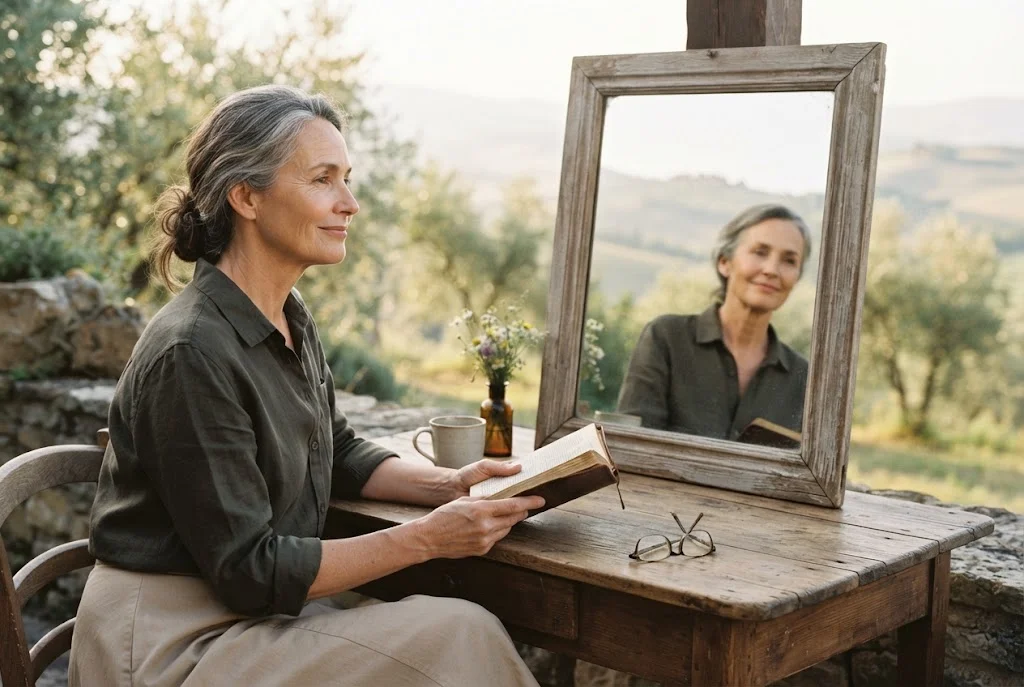
Beauty Is More Than a Reflection in the Mirror
A mirror can show a person’s outward appearance, but it cannot show their patience, courage, generosity, faith, memories, wisdom, or capacity to love.
Those qualities require time and relationships to become visible.
This is one reason the biblical concept of beauty remains relevant even in a highly visual culture. It provides a framework for separating physical appearance from the much larger question of human worth.
The same principle can be useful when thinking about modern celebrity culture. Public figures are often presented primarily through appearance, fashion, and carefully produced images. A broader perspective can be found in discussions such as celebrity culture and life behind public images.
Can Beauty and Faith Exist Together?
Yes. Faith does not require a person to reject beauty, creativity, fashion, or personal care.
The biblical concern is primarily about priorities.
Appearance can be appreciated without being idolized. Fashion can be enjoyed without becoming an identity. Skincare can be part of self-care without becoming an obsession. Physical attraction can be recognized without reducing people to their appearance.
A balanced approach allows beauty to be enjoyed while recognizing that it is only one part of human life.
Frequently Asked Questions About Beauty Fades Scripture
What Bible verse says beauty fades?
Proverbs 31:30 is the passage most commonly associated with the idea that beauty fades. It contrasts temporary beauty and charm with reverence for God, emphasizing a deeper form of worth.
What does “beauty is fleeting” mean?
It means physical beauty is temporary and changes over the course of life. The biblical teaching encourages people to place greater value on character, faith, wisdom, and how they treat others.
Does the Bible say we should not care about our appearance?
No. The Bible does not require people to ignore personal appearance. The broader teaching is about priorities: appearance should not become the primary source of identity or worth.
What is inner beauty according to the Bible?
Inner beauty refers to qualities such as faith, kindness, humility, patience, compassion, integrity, and a sincere character. These qualities are emphasized because they are not dependent on physical youth.
Does the Bible have a positive view of aging?
Scripture includes passages that present later life as meaningful and connect age with wisdom, experience, remembrance, and the opportunity to guide future generations.
How can Christians avoid becoming obsessed with beauty?
A practical starting point is to keep appearance in perspective, reduce unhealthy comparison, develop character, invest in relationships, and focus attention on faith, service, gratitude, and meaningful responsibilities.
A Better Way to Understand Beauty
The message behind beauty fades scripture is not that beauty is worthless. It is that physical appearance cannot carry the full weight of human value.
Appearance changes. Fashion changes. Cultural standards change. Youth changes. But qualities such as love, wisdom, compassion, integrity, patience, and faith can continue developing throughout a person’s life.
That perspective allows people to care for themselves without becoming controlled by appearance. It makes room for fashion without turning fashion into identity, and it allows people to appreciate physical beauty while recognizing something deeper.
Ultimately, the biblical perspective invites us to measure a meaningful life by more than what can be seen in a mirror. When character, relationships, faith, and love become part of the definition of beauty, growing older does not have to mean becoming less valuable. It can become another stage in which a different and deeper kind of beauty becomes visible.
For readers interested in broader lifestyle perspectives, healthy lifestyle habits can provide another practical starting point for building routines that support overall well-being rather than appearance alone.