
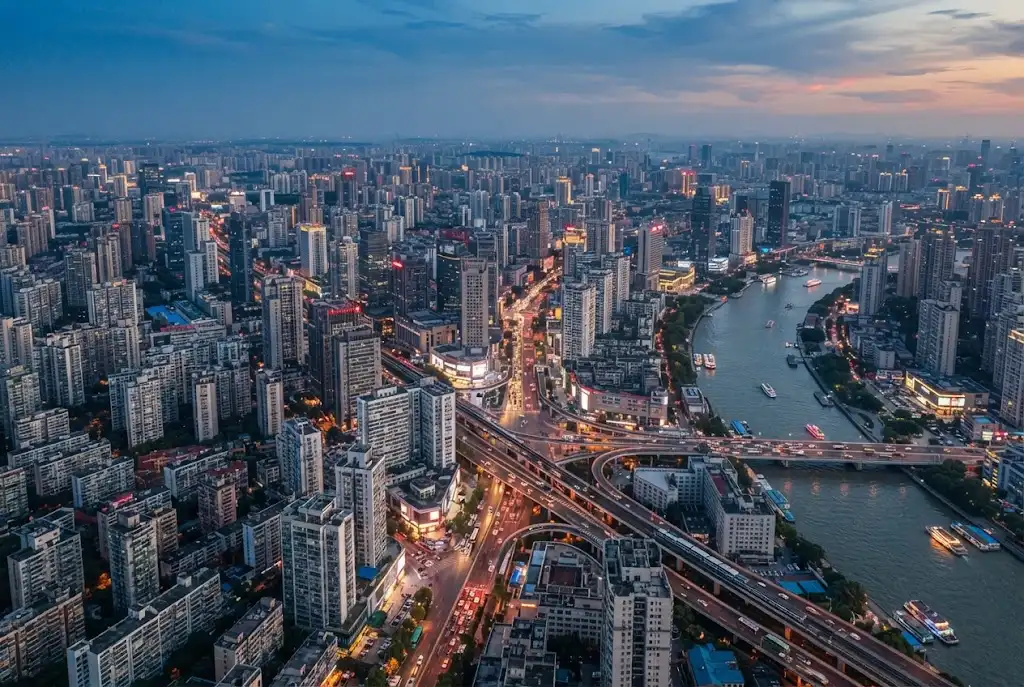
Megacities are among the largest and most influential urban areas in the world. They bring together millions of residents, businesses, transportation systems, cultural institutions, housing communities, and economic activity within enormous urban regions. But what exactly makes a city a megacity, how many are there, and why are these huge urban centers becoming increasingly important?
A megacity is generally defined as an urban area with at least 10 million inhabitants. According to the latest United Nations World Urbanization Prospects 2025, the number of megacities has grown dramatically over the past five decades.
What Is a Megacity?
A megacity is an urban area with a population of 10 million or more people. The classification focuses primarily on population size, although the exact population of an urban area can vary depending on how its boundaries are defined.
This is important because a city’s administrative boundaries do not always represent the full extent of its built-up urban environment. A large metropolitan region may include a central city, suburbs, satellite communities, and other connected areas. As a result, population figures can differ between municipal, metropolitan, and urban-agglomeration measurements.
The United Nations uses standardized urbanization methods to make international comparisons more meaningful. Its 2025 urbanization data provides estimates and projections for cities around the world from 1950 through 2050.
How Many Megacities Are There in the World?
The United Nations identified 33 megacities in 2025, each with at least 10 million inhabitants. That number has increased substantially from 1975, when there were only eight megacities worldwide.
The latest UN projections indicate that the number could increase to 37 megacities by 2050. This growth reflects broader changes in population distribution and continuing urbanization across many parts of the world.
However, megacities represent only a small portion of all cities. The majority of cities worldwide remain much smaller, and small and medium-sized cities account for a larger share of the global urban population than megacities.
Where Are Most Megacities Located?
Asia has the largest concentration of megacities. In 2025, 19 of the world’s 33 megacities were located in Asia.
Other megacities are distributed across Africa, Europe, Latin America, and Northern America. This geographic spread demonstrates that extremely large urban populations are not limited to a single region or type of economy.
Some of the world’s largest urban areas are also major destinations for international travelers. For a broader look at major destinations across the continent, see our guide to top places to visit in North America.
What Are Some Examples of Megacities?
Well-known megacities include Jakarta, Dhaka, Tokyo, Cairo, Delhi, Shanghai, Mumbai, Beijing, Manila, and other major urban centers across Asia, Africa, Europe, and the Americas.
The population rankings of these cities can change over time because urban populations continue to grow or decline at different rates. The ranking can also vary depending on whether researchers measure a city, an urban agglomeration, or a broader metropolitan area.
The World’s Largest Megacities
The 2025 United Nations data shows that Jakarta is the world’s most populous city under its urban-area measurement, with nearly 42 million inhabitants. Dhaka follows with nearly 40 million, while Tokyo has about 33 million.
These figures illustrate how dramatically urban populations can differ from the populations of the municipalities that carry the same city names. Large urban regions can extend well beyond traditional city boundaries.
Why Do Megacities Continue to Grow?
Megacity growth is connected to several demographic and economic forces. People often move toward large urban centers because they offer access to employment, education, healthcare, transportation, business opportunities, entertainment, and specialized services.
Large cities can also create powerful economic networks. Businesses benefit from access to large labor markets, customers, suppliers, investors, universities, and transportation infrastructure.
Population growth can come from both natural population increase and migration. In rapidly developing regions, expanding urban areas can attract people from smaller communities in search of employment and better access to services.
What Are the Advantages of Megacities?
Living in a megacity can provide access to a wide range of opportunities and services that may be less available in smaller communities.
Employment Opportunities
Large urban economies often contain diverse industries, from finance and technology to manufacturing, healthcare, education, tourism, transportation, and professional services. This diversity can provide employment options for people with very different skills and backgrounds.
Education and Research
Major cities frequently contain universities, research institutions, libraries, professional schools, and training centers. These institutions can attract students, researchers, and businesses from other regions.
Transportation Connections
Megacities often have extensive transportation networks connecting neighborhoods and surrounding communities. Major airports, rail systems, highways, ports, and public transit can make them important regional and international gateways.
Cultural Diversity
Large urban populations can bring together people from different cultural, linguistic, and social backgrounds. This diversity can influence food, music, arts, festivals, entertainment, fashion, and everyday urban life.
What Challenges Do Megacities Face?
The enormous scale of a megacity can also create serious challenges. Managing millions of residents requires continuous investment in infrastructure, housing, transportation, utilities, healthcare, sanitation, and public services.
Traffic Congestion
Millions of daily journeys can place enormous pressure on roads and transportation systems. Traffic congestion can increase commuting times and contribute to air pollution and other environmental problems.
Effective public transportation, walkable neighborhoods, improved road planning, and better connections between residential and employment areas can help cities manage mobility more efficiently.
Housing Pressure
Rapid population growth can increase demand for housing. When construction does not keep pace with demand, housing costs can rise and lower-income residents may have difficulty finding suitable homes.
Affordable housing, responsible land-use planning, and infrastructure investment are therefore important parts of managing megacity growth.
Environmental Challenges
Large populations require enormous amounts of energy, water, transportation, food, and waste management. Cities must find ways to meet these needs while reducing environmental pressure.
Air quality, water management, urban heat, waste disposal, energy consumption, and protection of green spaces are among the issues that can become increasingly important as urban areas expand.
Pressure on Public Services
Healthcare facilities, schools, emergency services, utilities, sanitation systems, and other public services must serve millions of residents. When population growth happens faster than infrastructure expansion, existing systems can become strained.
Megacity vs. Metropolitan Area
The terms megacity and metropolitan area are sometimes used as though they mean the same thing, but they describe different concepts.
A megacity is generally identified according to its very large urban population. A metropolitan area, meanwhile, can include a central city together with surrounding communities that are economically and socially connected through employment, transportation, housing, and commerce.
This distinction explains why population estimates for the same location may differ between different sources. The geographic boundary being measured has a major effect on the final number.
Are Megacities the Biggest Cities by Every Measure?
Not necessarily. Population size does not automatically determine economic output, land area, wealth, or global influence.
A megacity can have a very large population while another smaller city may have greater economic output per resident. Likewise, a smaller city can have substantial global influence because of its financial sector, technology industry, cultural institutions, political importance, or strategic location.
Megacity status therefore tells us primarily about population scale rather than providing a complete ranking of a city’s importance.
Do Most People Live in Megacities?
No. Despite their enormous populations, megacities are still a relatively small part of the world’s overall urban system.
The United Nations reports that 96 percent of the world’s cities in 2025 had fewer than 1 million inhabitants. Small and medium-sized cities collectively account for a substantial share of the world’s urban population.
This is an important point when discussing global urbanization. The future of cities is not only about the growth of the world’s biggest metropolitan areas. Thousands of smaller cities are also expanding and require effective infrastructure, housing, transportation, and land-use planning.
What Will Happen to Megacities by 2050?
The number of megacities is projected to continue increasing. The United Nations expects the total to reach 37 by 2050.
Several urban areas that are currently below the 10-million threshold are projected to become megacities. These include Addis Ababa, Dar es Salaam, Hajipur, and Kuala Lumpur.
At the same time, not every megacity will continue growing at the same rate. Some established urban areas may experience slower population growth or even population decline. Demographic change therefore means that the global ranking of major cities will continue to evolve.
How Megacities Could Change in the Future
Future megacities will need to manage population growth while maintaining livability and resilience. Urban planners will increasingly need to consider transportation, housing, energy, water, waste management, environmental protection, public health, and economic opportunity together.
Technology can support these goals through smarter transportation systems, digital public services, improved infrastructure monitoring, energy management, and data-driven urban planning.
However, technology is only one part of the solution. Effective governance, long-term investment, appropriate land-use policies, and inclusive planning are equally important.
Why Megacities Matter
Megacities provide a clear example of how dramatically human settlement patterns have changed. From just eight megacities in 1975 to 33 in 2025, the growth of these urban areas reflects the wider shift toward increasingly urban societies.
They are also important because decisions made in major cities can affect regional economies, transportation networks, housing markets, environmental conditions, and international commerce.
Understanding megacities therefore means looking beyond population numbers. Their long-term success will depend on how effectively they manage growth while providing residents with reliable infrastructure, economic opportunities, safe communities, and sustainable environments.
Frequently Asked Questions About Megacities
What is the definition of a megacity?
A megacity is an urban area with at least 10 million inhabitants.
How many megacities are there in 2025?
According to the United Nations’ 2025 urbanization data, there are 33 megacities with populations of at least 10 million.
Which region has the most megacities?
Asia has the largest concentration. In 2025, 19 of the world’s 33 megacities were located in Asia.
Will there be more megacities in the future?
Yes. The United Nations projects that the number of megacities could rise from 33 in 2025 to 37 by 2050.
Are megacities the same as metropolitan areas?
No. A megacity is primarily a population-based urban classification, while a metropolitan area can include a central city and surrounding communities connected through commuting and economic activity.
Why are megacities important?
Megacities are major centers of population, employment, business, transportation, culture, education, and innovation. They also demonstrate many of the infrastructure and environmental challenges associated with rapid urban growth.
Conclusion
Megacities are among the clearest examples of modern urbanization. Their enormous populations create significant economic and cultural opportunities while also placing considerable demands on housing, transportation, infrastructure, public services, and the environment.
With 33 megacities recorded in 2025 and the number projected to reach 37 by 2050, these urban areas will remain an important part of the global population story. Understanding how megacities grow and how they address their challenges can provide valuable insight into the future of cities around the world.