
Although the phrase “remote opportunities” is sometimes used when discussing flexible employment, traditional order selector positions are generally performed on-site because workers need to physically pick, stage, and move merchandise. The traveling aspect may instead refer to people who are willing to pursue warehouse and distribution opportunities in different cities or regions.
For anyone considering this career path, understanding the responsibilities, required skills, equipment, schedules, compensation factors, and potential career progression can make the job search much more productive.
What Is an Order Selector?
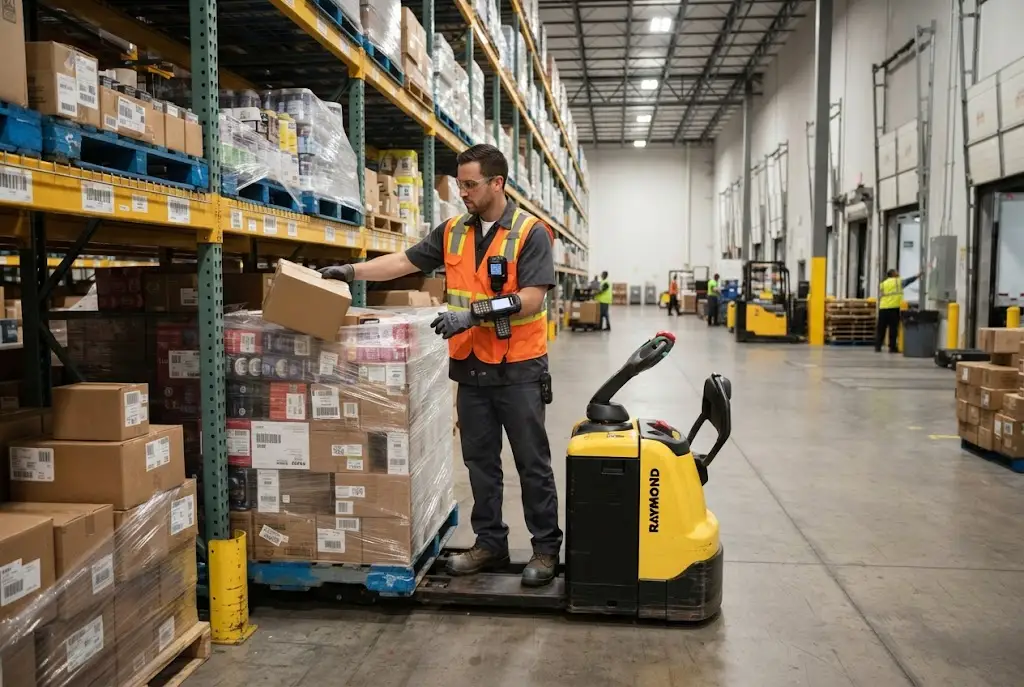
An order selector is a warehouse or distribution-center employee responsible for assembling customer or business orders from stored inventory. Instead of simply moving random products, the selector follows an order, pick list, voice-directed system, scanner, or electronic instruction to locate the correct merchandise.
Once products are selected, they may need to be checked, organized, labeled, wrapped, palletized, and moved to a designated staging or shipping area. Accuracy is essential because an incorrect product or quantity can create delays throughout the supply chain.
This type of work connects closely with the broader global logistics industry, where inventory movement and accurate fulfillment are essential to keeping products moving from suppliers to customers.
What Are Traveling Order Selector Jobs?
The term traveling order selector jobs can describe opportunities that appeal to workers who are willing to relocate, accept assignments in different markets, or pursue warehouse employment beyond their immediate area. It does not necessarily mean that the worker performs order selection remotely from home.
Traditional order selector work requires physical access to inventory. Current job listings commonly describe responsibilities involving picking products, checking orders, staging merchandise, palletizing loads, and operating equipment such as pallet jacks or forklifts.
For workers who enjoy mobility, this can create a different kind of flexibility: instead of being tied to one local employer, they can search for opportunities across multiple cities and distribution markets.
Why Consider a Career as an Order Selector?
Order selection can be an accessible entry point into logistics because many employers focus heavily on reliability, physical capability, attention to detail, and warehouse readiness. Some positions may prefer previous warehouse experience, while others provide training for equipment and internal procedures.
The role can also provide experience that transfers into other supply chain positions. Someone who begins as an order selector may eventually explore inventory control, receiving, shipping, transportation coordination, warehouse supervision, or other logistics-related positions.
Readers interested in independent work arrangements can also explore logistics independent contractor opportunities to understand how logistics careers can extend beyond traditional employee roles.
Typical Responsibilities of an Order Selector
Exact duties vary by employer, warehouse type, products, and shift. However, many order selector positions involve several recurring responsibilities.
- Reading customer orders, pick tickets, or electronic instructions
- Locating products within designated warehouse areas
- Selecting the correct products and quantities
- Scanning merchandise or recording picked items
- Checking products for accuracy or visible damage
- Building and organizing pallets
- Wrapping or labeling completed orders
- Moving merchandise to staging or shipping areas
- Operating pallet jacks, forklifts, or other approved equipment
- Following warehouse safety procedures
- Maintaining an organized work area
Because the work directly supports fulfillment, attention to detail is just as important as speed. A fast selector who repeatedly makes errors can create more operational problems than a careful employee who maintains consistent accuracy.
Skills You Need for Order Selector Jobs
Successful order selectors typically combine physical capability with practical warehouse skills. The ability to remain focused during repetitive work is particularly valuable because many shifts involve completing numerous orders within defined productivity expectations.
Physical Fitness
Order selection can involve lifting, carrying, pushing, pulling, bending, walking, and standing for extended periods. Some positions involve heavier products, so applicants should carefully review the physical requirements of each opening.
Attention to Detail
Accuracy matters throughout the picking process. Product numbers, quantities, locations, labels, and customer requirements must be checked carefully.
Equipment Awareness
Depending on the facility, workers may use hand trucks, pallet jacks, forklifts, scanners, headsets, or voice-directed picking systems. Training requirements differ between employers.
Time Management
Distribution centers often measure productivity, making the ability to work efficiently without sacrificing accuracy an important skill.
Traveling for Logistics Employment
Workers interested in traveling order selector opportunities should distinguish between a traveling job and a remote job. A remote job generally allows the employee to perform duties away from the physical workplace. Order selection, however, normally requires direct access to warehouse inventory.
A traveling logistics worker may instead move between locations, relocate for a position, accept opportunities in different states, or use temporary and contract arrangements where available.
This approach may appeal to people who are comfortable adapting to new workplaces and communities. It can also expose workers to different warehouse systems, inventory environments, product categories, and operational procedures.
For broader transportation and shipping context, readers can explore global shipping and logistics operations and modern supply chain solutions.
Warehouse Order Selector Schedules
Warehouse operations often continue beyond conventional daytime business hours because distribution centers may receive, process, and ship products throughout the day and night.
As a result, order selector positions may be available on morning, afternoon, evening, overnight, weekend, or rotating schedules. Current job listings show examples of both daytime and night-shift order selector positions.
Before applying, candidates should check the exact shift, days worked, overtime expectations, seasonal requirements, and whether the schedule can change according to operational demand.
Pay and Benefits for Order Selectors
Compensation varies considerably depending on location, employer, experience, shift, product category, union status where applicable, productivity incentives, and overtime.
Current listings demonstrate that order selector compensation can include hourly wages, incentive opportunities, overtime, health coverage, retirement plans, paid time off, and other employer-specific benefits.
Rather than focusing only on the advertised hourly rate, applicants should evaluate the entire employment package. A slightly lower base wage may sometimes be accompanied by stronger benefits, predictable hours, training, or advancement opportunities.
How to Find Traveling Order Selector Jobs
A focused job-search strategy can make it easier to identify suitable openings. Start by searching multiple variations of the role rather than relying only on the exact phrase “traveling order selector.”
Useful search terms include:
- Order selector jobs
- Warehouse order selector
- Order picker jobs
- Warehouse picker
- Distribution center jobs
- Warehouse associate
- Night order selector
- Order selector picker
- Warehouse logistics jobs
- Traveling warehouse jobs
It is also useful to search by location. Workers willing to relocate can compare opportunities across multiple cities instead of limiting themselves to their current local market.
How to Build a Strong Order Selector Resume
A good resume should make relevant warehouse skills easy for employers to identify. If you have previous experience with inventory, picking, packing, shipping, receiving, material handling, or warehouse equipment, place those qualifications prominently.
Useful resume details may include:
- Warehouse and distribution experience
- Order picking or order fulfillment experience
- Forklift or pallet jack experience
- RF scanner or warehouse management system experience
- Inventory handling
- Shipping and receiving
- Safety training
- Ability to work different shifts
- Experience meeting productivity targets
- Willingness to relocate or travel for work
Applicants with logistics experience can also strengthen their understanding of the industry by reviewing resources about supply chain logistics and distribution.
Advancement Opportunities in Warehouse Logistics
Order selection does not have to be the final destination of a logistics career. Experience gained inside a distribution center can provide a foundation for additional responsibilities.
Depending on the employer and the worker’s skills, potential progression can include lead selector, inventory specialist, shipping coordinator, receiving specialist, warehouse supervisor, logistics coordinator, or operations management.
Additional training in warehouse management systems, equipment operation, inventory control, transportation, and leadership can improve a worker’s ability to compete for higher-responsibility positions.
People considering alternative employment models can also review nationwide travel-job opportunities as an example of how some careers are structured around mobility rather than a single permanent workplace.
Safety Matters in Order Selector Jobs
Warehouse work can involve moving vehicles, elevated equipment, heavy products, narrow aisles, loading areas, and repetitive physical movements. Safety should therefore remain a priority throughout every shift.
Workers should follow employer procedures for lifting, equipment operation, pedestrian movement, personal protective equipment, pallet stability, and emergency situations. New employees should also take required training seriously rather than relying on assumptions based on previous warehouse experience.
Employers may have different equipment and safety rules, so workers should always follow the procedures established at the specific facility.
Who Is a Good Fit for Traveling Order Selector Jobs?
This career path may suit people who prefer active work instead of sitting at a desk for an entire shift. It can also be a good fit for workers who enjoy structured tasks, measurable goals, teamwork, and fast-moving environments.
People who are considering travel or relocation may find additional possibilities by searching multiple markets. However, candidates should be realistic about the physical nature of the work and confirm job requirements before accepting an assignment.
Those interested in the wider movement of goods can also explore cargo industry developments and global logistics operations to better understand how warehouse roles fit into the larger supply chain.
Questions to Ask Before Accepting a Job
Before accepting an order selector position, ask practical questions about the actual working conditions. This is especially important when considering a job that involves relocation or travel.
- Where is the primary work location?
- Is the position permanent, seasonal, temporary, or contract-based?
- What are the normal working hours?
- Is overtime required or optional?
- What equipment will employees operate?
- What are the lifting and physical requirements?
- Is training provided?
- Are benefits available?
- Does the employer provide relocation or travel assistance?
- What opportunities exist for advancement?
Getting clear answers before accepting an offer can help prevent misunderstandings about the job, particularly when the advertisement uses terms such as “traveling,” “flexible,” or “remote.”
Final Thoughts
Traveling order selector jobs can provide an entry point into the expanding world of warehousing, distribution, and supply chain operations. While traditional order selector work is generally performed on-site rather than remotely, workers who are willing to travel or relocate may have access to a broader range of employment markets.
The strongest candidates combine physical readiness with accuracy, reliability, safety awareness, and the ability to work efficiently under structured productivity expectations. With experience and additional training, an entry-level warehouse position can also become the starting point for a longer logistics career.
When searching for opportunities, compare the actual duties, location, schedule, compensation, benefits, training, and advancement potential instead of relying only on the job title. Most importantly, verify the current requirements and employment terms directly with the hiring company before accepting a position.