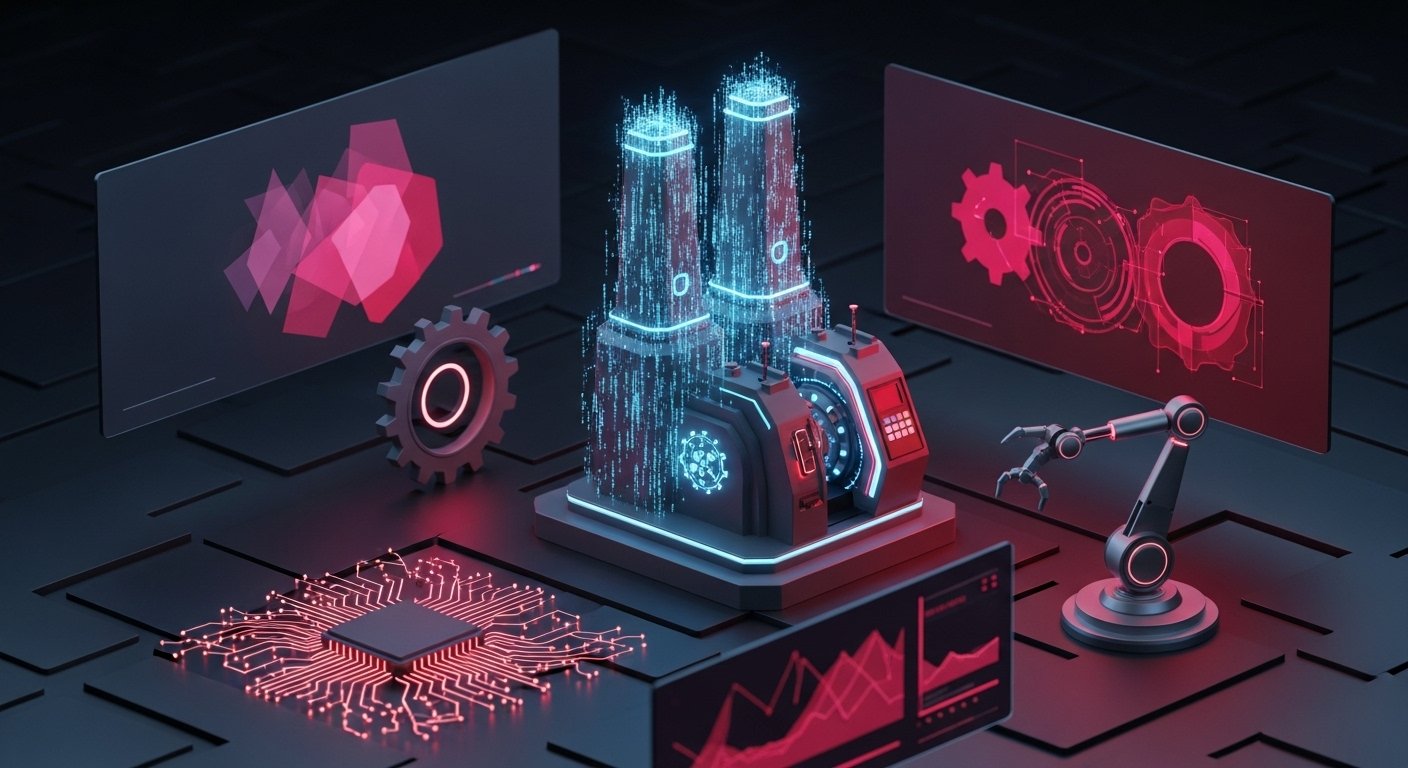
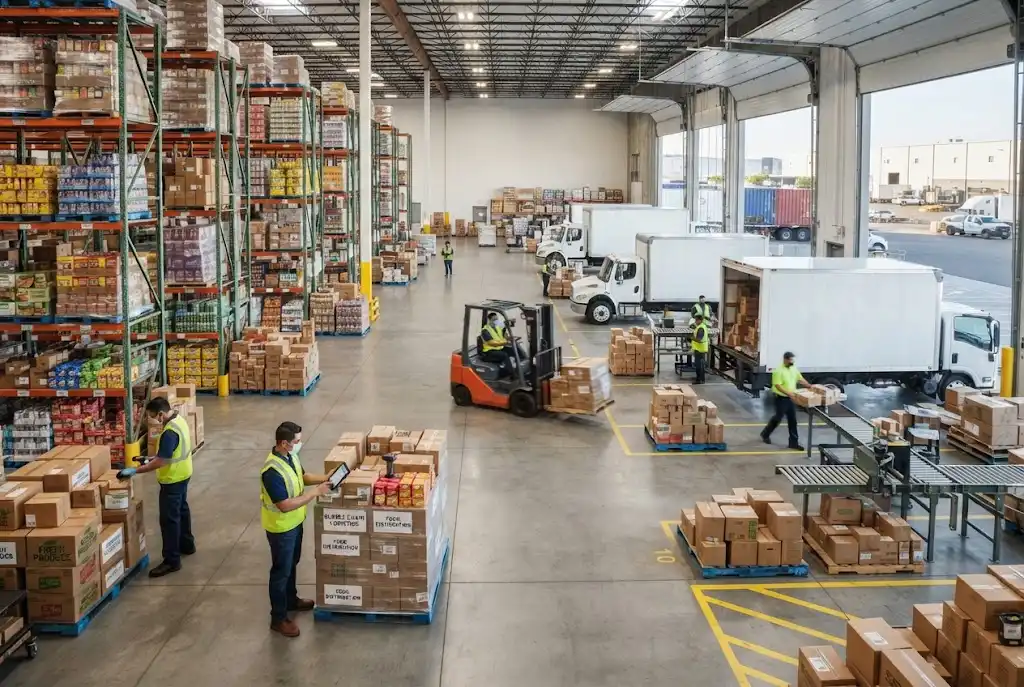
Understanding how these capabilities fit into a modern food supply chain helps explain why coordination, visibility, inventory planning, and reliable transportation are so important. Rather than treating logistics as a final step after purchasing, successful food businesses increasingly manage sourcing, warehousing, transportation, and demand as interconnected activities.
What Is Rema Foods?
Rema Foods describes itself as a global food sourcing and supply chain solutions company. Its model extends beyond importing products and focuses on helping customers source quality products, manage supply-chain requirements, and develop solutions around their individual business needs.
The company’s stated approach includes supplier vetting, quality assurance, collaborative demand planning, efficient logistics, and category management. It also works across areas including own-brand consumer goods, foodservice products, and industrial recipe ingredients.
This broader approach is important because food supply chains can involve many separate stages. Products may move from international suppliers to ports, warehouses, distribution facilities, retailers, restaurants, or manufacturers before reaching the final consumer.
Where Penske Logistics Fits Into the Supply Chain
Penske Logistics operates across transportation and supply-chain management, including dedicated transportation, warehousing, distribution, and technology-enabled logistics solutions. Its food and beverage logistics services are designed around the particular requirements of food products, including transportation visibility, storage, delivery coordination, and compliance considerations.
For food businesses, transportation is not simply about moving a shipment from one location to another. Timing, product condition, documentation, inventory visibility, delivery windows, and coordination between warehouses and customers can all influence supply-chain performance.
That is why a logistics provider can become an important operational partner rather than merely a carrier.
Rema Foods and Penske Logistics: A Supply Chain Perspective
The phrase Rema Foods Penske Logistics can be understood in the broader context of food supply-chain coordination. Rema Foods focuses on sourcing and supply-chain solutions, while Penske provides logistics capabilities across transportation, warehousing, distribution, and technology.
It is important not to assume that every Rema Foods operation is handled by Penske Logistics. Instead, the two names provide a useful framework for understanding how specialized food sourcing and professional logistics capabilities can work together within the wider food-distribution ecosystem.
This distinction matters for businesses researching logistics providers. A supply chain may involve several partners, with each responsible for a particular function such as sourcing, importing, warehousing, transportation, fulfillment, or retail distribution.
Why Food Supply Chains Require Specialized Logistics
Food logistics involves requirements that can be more demanding than ordinary general freight. Depending on the product, businesses may need to manage temperature conditions, sanitation, traceability, delivery schedules, packaging, inventory rotation, and regulatory documentation.
Penske’s food and beverage logistics information specifically highlights temperature-controlled transportation, food-safety considerations, monitoring, tracking, warehousing, and direct-store delivery. These capabilities demonstrate how logistics planning can become closely connected with product quality and customer service.
For additional context, readers can explore Blue Bear Logistics and modern supply-chain operations.
Supply Chain Planning at Rema Foods
Rema Foods states that its supply-chain model is built around individual customer requirements. Its principles include customizing logistics for product segments, aligning demand planning across the supply chain, using information technology to support decision-making, and adopting service-level and financial metrics.
This approach recognizes that different products can require different supply-chain strategies. A foodservice customer, retailer, manufacturer, or consumer-brand owner may have different ordering patterns, storage requirements, transportation schedules, and demand cycles.
Instead of applying one logistics model to every product, customized planning can help companies align inventory and transportation with actual business requirements.
Warehousing and Distribution
Warehousing is one of the most important links between international sourcing and final distribution. Products need to be received, stored, organized, monitored, and prepared for their next destination.
Rema Foods highlights flexible supply-chain solutions and management of orders and inventory across a network of domestic warehouses. Penske also identifies warehousing and distribution as important parts of its logistics capabilities.
A well-managed warehouse can therefore support several objectives at once: inventory availability, order accuracy, efficient transportation planning, and improved visibility across the supply chain.
The subject connects naturally with Logistica Malloles Company and its warehouse-focused logistics operations.
Transportation and Delivery Efficiency
Transportation is where supply-chain planning becomes physical movement. Even a well-sourced product can create problems if it cannot reach warehouses, distribution centers, stores, or customers at the required time.
Penske’s food logistics solutions emphasize transportation planning, delivery coordination, flexible transportation options, and technology that improves visibility. For food businesses, this can be especially valuable when delivery schedules affect store operations, inventory availability, or product freshness.
Businesses can also learn more about the wider shipping environment through this guide to global shipping and logistics.
Technology and Supply Chain Visibility
Modern food logistics increasingly depends on accurate data. Companies need to know where products are, what inventory is available, when shipments are expected, and whether transportation is progressing according to plan.
Penske’s food-supply-chain technology materials describe the use of technology for shipment documentation, tracking, visibility, and communication between transportation and warehouse systems. These capabilities can help supply-chain teams identify problems earlier and make better operational decisions.
Rema Foods also identifies information technology as one of its supply-chain principles, reinforcing the importance of data-supported decision-making.
The broader role of technology in business connectivity is explored in this NourishPost technology guide.
Demand Forecasting and Inventory Management
Food supply chains need to balance product availability against the cost and complexity of holding inventory. Overstocking can tie up capital and storage capacity, while insufficient inventory can contribute to missed sales and service problems.
Rema Foods highlights assistance with forecasting, buying, and safety-stock levels as part of its supply-chain expertise. This reflects a broader logistics principle: transportation and warehousing work best when they are connected to realistic demand expectations.
Forecasting also becomes important when demand changes seasonally or when a product experiences unexpected growth. A flexible supply chain needs enough information and operational capacity to respond without creating unnecessary disruption.
Food Safety and Supply Chain Compliance
Food logistics requires careful attention to safety and regulatory requirements. Depending on the product and transportation model, businesses may need to manage temperature controls, sanitation, traceability, documentation, and handling procedures.
Penske’s food logistics resources emphasize food-safety compliance, temperature monitoring, tracking, and documentation. These processes can provide greater visibility and help companies maintain appropriate controls throughout transportation and storage.
For businesses involved in food distribution, compliance should therefore be considered an operational requirement rather than an afterthought.
From International Sourcing to the Consumer
One of Rema Foods’ central ideas is that imported food products require more than international shipping. The company describes its role as helping coordinate the journey from harvest through the supply chain to the consumer’s table.
That journey can involve suppliers, quality-control processes, international transportation, customs and import activities, warehouses, domestic transportation, distribution centers, retailers, foodservice businesses, and final customers.
Each stage introduces potential delays or inefficiencies. Coordinating these stages effectively is what turns a collection of individual logistics activities into an integrated supply chain.
The importance of the wider cargo ecosystem is also discussed in this article about the cargo industry and international commerce.
Benefits of an Integrated Food Supply Chain
An integrated supply chain can provide several potential advantages when sourcing, inventory, warehousing, transportation, and demand planning are coordinated effectively.
- Better inventory visibility: Businesses can make decisions using more accurate information about available stock and expected demand.
- Improved transportation planning: Shipments can be coordinated around warehouse capacity and delivery requirements.
- Reduced operational friction: Better communication can reduce unnecessary handoffs and duplicated processes.
- Stronger customer service: Reliable product availability and delivery can support better service levels.
- Greater flexibility: Supply-chain models can be adapted as products, customers, or demand patterns change.
- Better decision-making: Technology and performance metrics can help teams identify problems and opportunities.
Challenges in Food Logistics
Despite advances in technology and logistics planning, food supply chains remain vulnerable to disruption. International sourcing introduces transportation dependencies, while domestic distribution requires coordination between warehouses, carriers, retailers, and other partners.
Demand changes can also create pressure. A sudden increase in orders can require additional inventory and transportation capacity, while slower demand can increase storage costs.
These challenges demonstrate why supply-chain planning needs to remain flexible. A static logistics model may work under normal conditions but become inefficient when demand, transportation capacity, or customer requirements change.
How Businesses Can Improve Food Supply Chain Performance
Businesses evaluating their food supply chains can focus on several practical areas.
1. Improve Demand Planning
Use historical sales information, current market conditions, and customer requirements to establish more realistic inventory expectations.
2. Connect Warehouse and Transportation Data
Warehouse activity and transportation planning should not operate in isolation. Better information flow can help businesses coordinate inventory movement and delivery schedules.
3. Measure Service Levels
Performance metrics can reveal whether a supply chain is meeting its operational objectives. Useful measurements can include delivery performance, inventory availability, order accuracy, and transportation efficiency.
4. Build Flexible Logistics Models
Different products and customers may require different solutions. Flexibility can help businesses respond to seasonal demand, new customers, or changes in distribution requirements.
5. Strengthen Supply Chain Communication
Suppliers, logistics providers, warehouses, distributors, and customers need reliable communication channels. Visibility becomes significantly more valuable when teams can act on the information they receive.
These principles are relevant beyond food distribution and are also applicable to broader business logistics. Readers can explore the future of small business for additional context on operational growth.
The Role of Logistics in Food Business Growth
Food businesses often compete not only on product quality but also on availability, consistency, price, and service. Logistics influences all of these areas indirectly.
A product that is sourced efficiently but stored poorly can still create operational problems. Likewise, a well-managed warehouse can lose its advantage if transportation is unreliable. The strongest supply chains therefore connect sourcing, inventory, warehousing, transportation, and customer demand.
This is why the Rema Foods approach is notable: its published supply-chain model extends beyond importing and incorporates sourcing, quality, demand planning, logistics, and category management.
Businesses interested in another perspective on specialized logistics can also review the role of logistics contractors in specialized operations.
Frequently Asked Questions
What is Rema Foods?
Rema Foods is a global food sourcing and supply-chain solutions company that works with imported food products, sourcing, quality assurance, demand planning, logistics, and category management.
What does Rema Foods do in the supply chain?
Rema Foods describes its role as extending beyond importing. Its services include product sourcing, supplier vetting, quality assurance, demand planning, logistics solutions, and category management.
What does Penske Logistics provide for the food industry?
Penske Logistics provides food and beverage logistics capabilities including transportation, warehousing, distribution, technology, tracking, and supply-chain management solutions.
Why is logistics important for imported food?
Imported food may pass through multiple supply-chain stages before reaching customers. Effective logistics helps coordinate transportation, warehousing, inventory, delivery schedules, and product-handling requirements.
Does Rema Foods use Penske Logistics for all of its operations?
Publicly available information does not establish that Penske Logistics handles all Rema Foods operations. The two companies are better discussed in the broader context of food sourcing and logistics capabilities unless a specific partnership is independently confirmed.
Why is supply-chain visibility important?
Visibility helps businesses understand inventory positions, shipment progress, delivery expectations, and potential disruptions. Better information can support faster and more informed operational decisions.
Final Thoughts
Rema Foods Penske Logistics represents a useful lens for understanding the increasingly integrated nature of modern food supply chains. Rema Foods focuses on sourcing and supply-chain solutions, while Penske Logistics provides transportation, warehousing, distribution, and technology capabilities for food and beverage operations.
The key lesson is that successful food logistics requires coordination across the entire chain. Demand planning, sourcing, inventory management, warehousing, transportation, visibility, and food-safety processes all contribute to the final customer experience.
As food businesses become more globally connected, companies that combine reliable sourcing with flexible logistics and data-driven decision-making will be better positioned to manage complexity and serve customers consistently.