
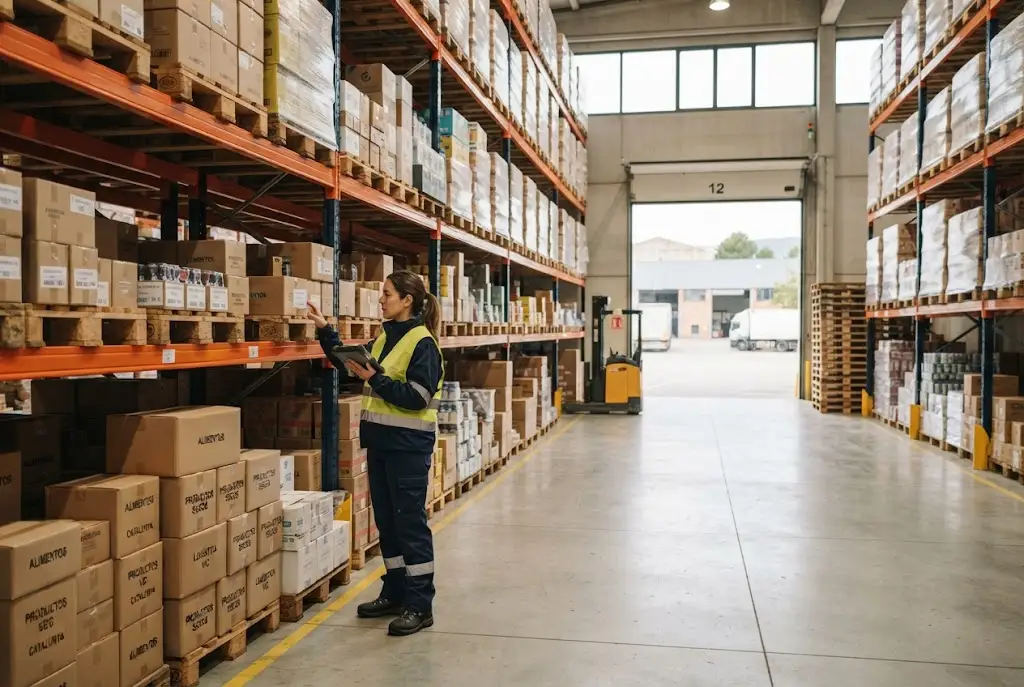
Its role as a regulatory or buffer warehouse allows businesses to store merchandise and manage inventory according to their operational requirements. This model can be particularly useful for companies that need dependable storage capacity between production, transportation, and final distribution.
What Is Logistica Malloles Company?
Logística Malloles S.L. specializes in the handling and storage of non-refrigerated food pallets. According to the company’s own information, its experience includes products such as milk, water, fruit juices, sugar, and raw materials including PET big bags and cardboard.
The business operates as a logistics operator and regulatory warehouse, adapting its storage function to the requirements of individual clients. This makes the company relevant to organizations that need additional warehouse capacity without treating storage as an isolated part of their wider supply chain.
For readers researching logistics providers, the Logistics category provides additional context on warehousing, shipping, and supply-chain topics covered by NourishPost.
Core Logistics and Warehousing Services
The central value of Logistica Malloles Company is its ability to provide organized storage and merchandise handling for businesses working with palletized products. Its operating model is built around keeping goods stored safely and making warehouse capacity available according to client requirements.
Food Pallet Storage
Food-related products form an important part of the company’s specialization. Its official information identifies non-refrigerated food pallets as a primary area of expertise, with experience involving everyday products such as milk, water, fruit juices, and sugar.
Businesses operating in food and beverage supply chains often require predictable storage conditions, efficient pallet handling, and dependable access to inventory. A dedicated warehouse operator can help separate these activities from manufacturing or retail operations.
Regulatory Warehouse Operations
Logistica Malloles describes itself as a regulatory warehouse that adapts to each customer’s needs. In practical terms, this type of facility can function as an important buffer within a supply chain, helping companies manage the timing between incoming goods and onward movement.
This approach is particularly relevant when production schedules, transportation availability, and customer demand do not always align perfectly. Effective warehousing can provide the operational flexibility needed to keep goods organized while reducing pressure on other parts of the supply chain.
The topic also connects with food supply chain logistics and the Rema Foods Penske Logistics discussion, which explores how logistics operations can support the movement of food products.
Strategic Location in Vic, Barcelona
Location is one of the most important considerations when evaluating a warehouse. Logistica Malloles is located in the Malloles Industrial Estate in Vic, Barcelona, at Carrer Sau, 15, on the corner of C/Tavertet.
The company highlights its proximity to the C-17 and C-25 roads as an important logistical advantage. These road connections provide access to several commercially significant destinations in Catalonia and beyond.
The company’s location can therefore be viewed as part of its operational proposition: a warehouse positioned within an established industrial area and connected to important road infrastructure can make the movement of palletized goods easier to coordinate.
Readers interested in the broader relationship between transportation networks and commerce can also explore the cargo industry and its role in economic activity.
Experience in Logistics Operations
Logistica Malloles states that it has around twenty years of experience as a logistics center. Long-term experience can be valuable in warehousing because efficient operations depend on more than physical storage space. Processes such as receiving, pallet handling, organization, inventory flow, and dispatch coordination all require consistent operational practices.
The company’s experience with different categories of goods also illustrates why specialized warehousing can be useful. Food products and raw materials may have different handling requirements, and a warehouse operator needs to understand how merchandise moves through the facility.
For a wider perspective on logistics roles, this guide to lab logistics and independent contractors examines another specialized logistics environment.
Why Warehouse Location Matters to Supply Chains
A warehouse is not simply a place where products remain until they are needed. Its location can influence transportation planning, delivery coordination, inventory positioning, and the time required to move products between different stages of a supply chain.
For businesses operating around Catalonia, having storage close to major road connections can support more predictable movement of goods. The benefit depends on the individual supply chain, but strategically located warehouse capacity can help businesses coordinate production and distribution more effectively.
This principle is also relevant when examining global shipping and logistics operations, where transportation networks and local handling capabilities must work together.
Logistica Malloles and Supply Chain Efficiency
Supply chain efficiency is ultimately about coordinating different activities so that goods move through the system with as little unnecessary friction as possible. Warehousing plays a central role because inventory must be received, stored, organized, and released at appropriate times.
A regulatory warehouse can provide a useful intermediate point between suppliers, manufacturers, distributors, and other commercial partners. Instead of requiring every business to maintain all of its own storage infrastructure, specialized logistics operators can provide warehouse capacity tailored to operational needs.
Businesses researching this broader subject may also find value in the Blue Bear Logistics supply-chain guide, which discusses logistics, shipping, and supply-chain considerations from another perspective.
Technology and Modern Logistics Expectations
Modern logistics increasingly depends on accurate information, organized inventory processes, and timely communication. While Logistica Malloles’ official material emphasizes warehousing and storage rather than presenting a detailed technology platform, technology remains an important consideration for businesses evaluating logistics partners.
Warehouse operations can benefit from inventory systems, digital documentation, barcode processes, scheduling tools, and other technologies that improve visibility. The right combination depends on the type of goods being handled and the complexity of the customer’s supply chain.
The relationship between technology and modern business operations is also explored in this article about business connectivity and technology.
What Businesses Should Consider Before Choosing a Warehouse Partner
Companies evaluating a logistics or warehousing provider should look beyond a simple list of services. Several practical questions can help determine whether a facility is suitable for a particular supply chain.
- Product compatibility: Confirm that the warehouse is appropriate for the type of merchandise being stored.
- Storage requirements: Determine whether the facility can accommodate the required pallet format, volume, and handling needs.
- Location: Consider how the warehouse connects with suppliers, customers, roads, ports, and other transportation infrastructure.
- Operating schedule: Understand when receiving, handling, and dispatch activities can take place.
- Handling processes: Ask how goods are received, organized, monitored, and released.
- Scalability: Consider whether the warehouse can support changing inventory requirements over time.
- Communication: Establish how operational information and warehouse requests are communicated between the client and provider.
These considerations are useful across logistics sectors, from food distribution to manufacturing and commercial warehousing.
Logistica Malloles for Food and Raw Material Storage
The company’s stated experience with food products and raw materials gives its warehouse operation a practical focus. Products such as sugar, water, fruit juice, and other non-refrigerated goods require organized pallet storage and dependable movement through the facility.
Raw materials such as PET big bags and cardboard can also form part of industrial supply chains. For manufacturers and distributors, keeping these materials available at an appropriate warehouse location can support smoother production and distribution planning.
The broader relationship between manufacturing decisions and operational efficiency is discussed in this guide to manufacturing strategy and the sunk cost fallacy.
Logistics, Business Growth, and Operational Flexibility
As businesses grow, warehouse requirements can change. A company may need more pallet positions, different inventory arrangements, or a more flexible relationship between incoming and outgoing goods. Working with a specialized logistics operator can provide an alternative to handling every storage requirement internally.
Operational flexibility is especially important for companies whose inventory levels change with production cycles, customer demand, or distribution schedules. A warehouse partner can become one component of a larger strategy for managing those fluctuations.
Businesses interested in the relationship between operational planning and growth can also read this discussion of the future of small business.
Frequently Asked Questions
What does Logistica Malloles Company specialize in?
Logística Malloles S.L. specializes in the handling and storage of non-refrigerated food pallets and operates as a logistics and regulatory warehouse adapted to client requirements.
Where is Logistica Malloles located?
The company is located in the Malloles Industrial Estate in Vic, Barcelona, Spain, on Carrer Sau near C/Tavertet.
What types of products does Logistica Malloles handle?
The company’s official information mentions products including milk, water, fruit juices, sugar, and raw materials such as PET big bags and cardboard.
Why is the company’s location important?
Logistica Malloles highlights its proximity to the C-17 and C-25 roads, giving the facility useful road connections for logistics operations in the surrounding region.
Does Logistica Malloles provide refrigerated storage?
The company’s official description specifically focuses on non-refrigerated food pallets. Businesses with specialized temperature-controlled requirements should confirm suitability directly with the company.
How long has Logistica Malloles been operating as a logistics center?
The company states that it has around twenty years of experience as a logistics center.
Final Thoughts
Logistica Malloles Company is best understood as a specialized logistics and warehousing operator serving businesses that need organized storage and handling of palletized, non-refrigerated goods. Its experience, industrial location in Vic, and proximity to major road connections make warehousing and supply-chain coordination the central themes of its offering.
For companies evaluating warehouse partners, the most important considerations remain product suitability, storage capacity, location, operating requirements, handling processes, and communication. A logistics provider that aligns with those needs can become an important part of a more reliable and flexible supply chain.
For current service details or to discuss specific storage requirements, businesses should review the official Logística Malloles website directly.